

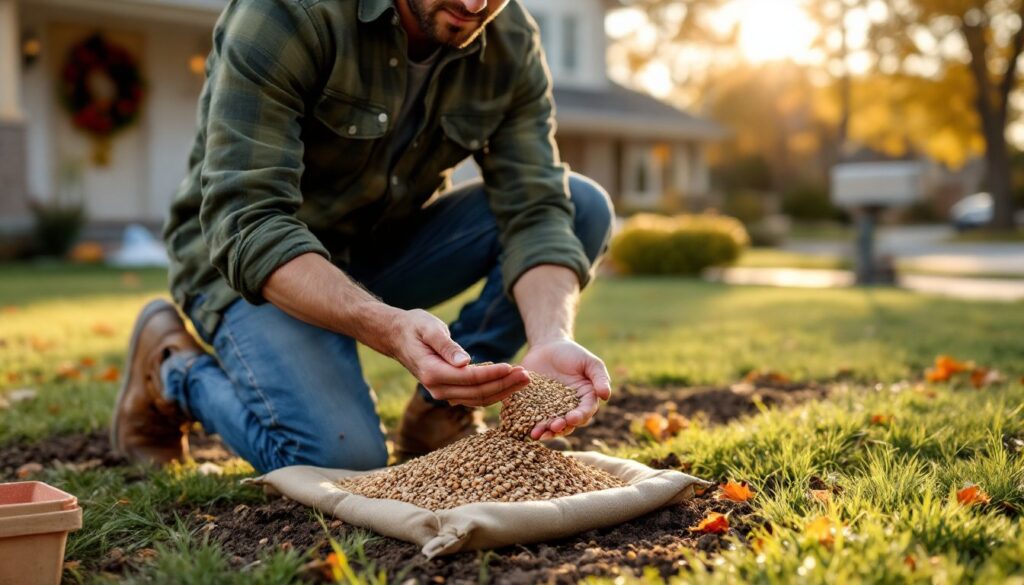
This guide is for homeowners, renters, and DIYers who want a durable, low-maintenance lawn without guessing at products. It explains how to pick the right seeding product for a given yard, read label details that actually matter, and prepare soil and timing so seed becomes turf, not wasted bags. The focus is practical: specific product types, seeding rates, starter fertilizer, and simple workflows for hand-seeding or overseeding so they get measurable results by the end of a season.
Key Takeaways
- Choosing the right seeding product tailored to your yard’s climate and conditions prevents wasted time and promotes healthy lawn growth.
- Read seed labels carefully, focusing on germination rate above 80%, low weed seed content under 1%, and named cultivars for better results.
- Use blends of compatible species for varied yard conditions and single-variety seed for uniform lawns or athletic fields requiring specific turf performance.
- Coated seeds improve moisture retention and early growth on slopes or erosion-prone areas, while plain seed suits flat, well-watered spaces.
- Prepare soil properly by clearing debris, testing pH, applying starter fertilizer, and timing seeding for early fall in cool-season grasses to optimize germination.
- Follow a consistent watering schedule with light, frequent watering until seedlings establish, then adjust for deeper watering to encourage robust root systems.
Why Choosing The Right Seeding Product Matters For Homeowners And Renters
Choosing the right seeding product reduces wasted time, prevents weed introduction, and aligns the lawn with local conditions like sun, drought, and soil type. A poor choice often means patchy germination, high irrigation, and repeat seeding within months. For small budgets, selecting seed that matches the yard is the highest-leverage decision before prep and watering.
Homeowners who select seed suited to their climate avoid repeated repairs. For example, cool-season blends are the right pick for most northern US yards, while warm-season species are better in the south. Renters need flexible solutions that fix bare spots and improve curb appeal without committing to high-maintenance varieties.
When evaluating seeding product options, treat the purchase like a small investment: pick seed with clear cultivar listing, acceptable weed content, and a realistic germination rate. If the concept of seeding product sourcing or influencer-based recommendations comes up, a concise primer on what is product seeding explains how product samples and reviews should be weighed against local performance.
Types Of Seeding Products And When To Use Them
There are three practical product categories homeowners will encounter: hand-seeding bags, coated/enhanced seed, and bulk or pro blends. Each has tradeoffs in cost, ease, and performance.
- Hand-seeding bags are cheapest and fine for small lawns or patch work. They are best when soil prep and watering are reliable.
- Coated or enhanced seed costs more but improves handling and early establishment on slopes or erosion-prone areas. Coatings can include starter nutrients and polymer for moisture retention.
- Bulk or pro blends are suited to larger yards where you want specific cultivar mixes or lower weed content. Buying from a local seed company often yields better purity than big-box mixes.
For additional context on seeding tactics used in marketing or demo campaigns, a practical overview of product seeding can help homeowners understand how brands position enhanced seed options and kits. Choose the category that matches scale, slope, and the budget available.
Blend Vs Single-Variety Seed
Blends mix compatible species or cultivars so a lawn tolerates variable shade, traffic, and moisture. They are the safe default for typical yards where microclimates exist. Single-variety seed makes sense when the existing lawn is uniform and the owner wants a very specific look or high-end turf performance.
Practical rule: use blends when the yard has both sun and shade or unknown soil conditions. Use single varieties for sod-matching or athletic areas where one cultivar’s performance is required.
When comparing labels, favor named cultivars over generic ‘fescue’ listings. A mix listing like ‘Kentucky bluegrass- Midnight, Apollo’ signals a cleaner product. If using influencer reviews or demos to choose a blend, cross-check those recommendations with local performance notes and a short product seeding strategy primer to avoid impulse buys.
Coated, Enhanced, And Instant-Grass Seed Options
Coated and enhanced seeds are not magic but they solve common problems: uneven distribution, quick drying, and washout on slopes. Coatings can include polymer gels for moisture retention, starter fertilizer, or a visible granule for even broadcast.
Instant-grass or ‘turf in a bag’ marketing is often misleading. Expect visible turf coverage in weeks for sod, but seed still requires a full season to mature. Coated seed will speed early germination and reduce seed loss, making it a good choice for smaller crews or renters who cannot water multiple times daily.
If cost is a constraint, prioritize coated seed for slopes or erosion-prone spots and plain seed for flat, well-irrigated areas. For shopping guidance, a product seeding examples resource shows common kit configurations and when each type makes sense.
Reading Seed Labels, Seeding Rates, And Germination Information
Reading the bag is a non-negotiable step. Key label items are species and cultivar names, percent pure seed, weed seed percentage, inert material percentage, germination rate, and lot number.
Follow these quick checks:
- Germination rate: Expect 80% or higher for quality seed. If below 70% plan to increase seeding rate to compensate.
- Weed seed: Any weed content above 1% indicates a low-grade mix. Avoid bags with high weed seed unless price is the only factor.
- Inert matter: Higher inert content means you paid for filler: sub-5% is good.
Seeding rates depend on grass type. Typical coverage rates:
- Cool-season blends: 4 to 6 pounds per 1,000 sq ft for new lawns.
- Overseeding established turf: 2 to 3 pounds per 1,000 sq ft.
- Warm-season grasses: 1 to 2 pounds per 1,000 sq ft, depending on whether plugging or seeding.
If the bag lists a lower germination rate, use a formula: adjusted rate = labeled rate divided by (germination rate as a decimal). For practical product demos and kit choices, consulting a product seeding kit overview helps match rates and supplies for DIY projects.
Prep, Timing, And Soil Basics For Successful Seeding
Preparation and timing are where most projects succeed or fail. Follow these steps as a repeatable workflow:
- Clear and grade. Remove debris, dead grass, and major weeds. Light raking or a dethatcher removes thatch but avoid deep tilling on established lawns.
- Test soil pH. Aim for 6.0 to 7.0 for most turf. Apply lime or sulfur based on test recommendations.
- Amend sparingly. Add compost or starter topsoil only where the base is compacted or poor. Too much new soil creates layering problems.
- Seed at the right time. For cool-season grasses seed in early fall when daytime temps are 60 to 75 F and nights are cooler. Spring is second choice but expect more weed competition. Warm-season seed goes in late spring to early summer when soil temps are consistently above 65 F.
- Use starter fertilizer. A phosphorus-containing starter helps root development. Apply at labeled rates and avoid over-application.
- Water for germination. Use light, frequent watering multiple times per day until seedlings are 1 to 2 inches tall, then reduce frequency and increase depth.
If seeding patches or trial areas first, track which product and method performed best. Influencer product demos can offer ideas but verify with local conditions and a short note on influencer product seeding to understand how sample conditions differ from a homeowner’s yard.
Conclusion
Success comes from matching the seeding product to the yard, reading labels, and executing a simple prep and watering routine. Prioritize seed purity and cultivar listings over brand buzz, pick coated products only where they solve real problems, and time cool-season seeding for early fall. With the right choices and consistent follow-through, a single well-executed seeding will save money and headaches compared with repeated patchwork attempts.