

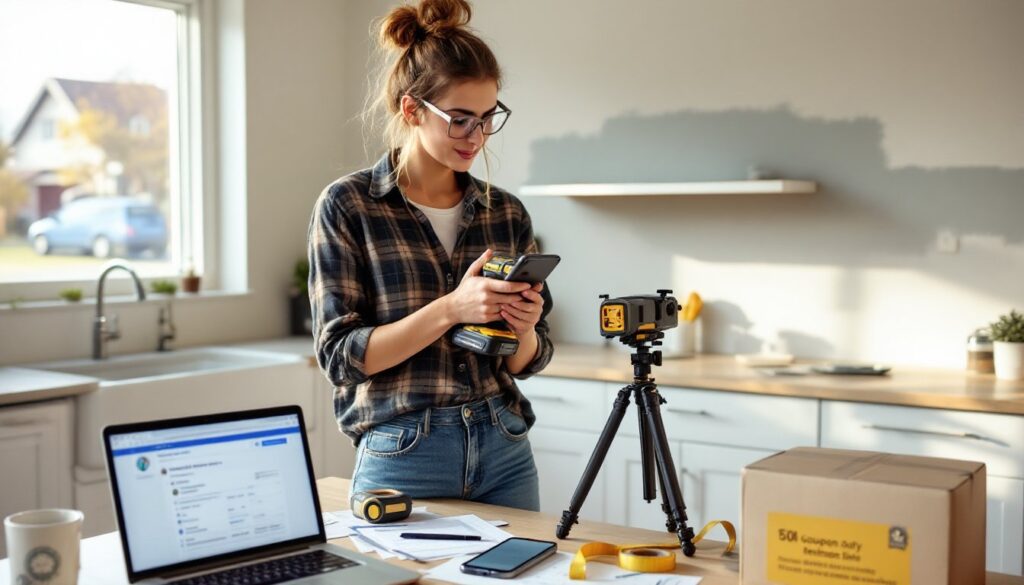
This guide is for homeowners, renters, and small DIY brands that need tangible results: clicks, leads, and purchases. It explains when micro-influencers are the most cost-effective choice, how to find creators who actually move the needle, and the exact outreach and compensation approaches that work for hands-on projects. The advice assumes limited budgets, practical timelines, and a focus on conversion rather than vanity metrics.
Key Takeaways
- Micro-influencers, with 5,000 to 100,000 followers, deliver higher engagement and better conversions for home and DIY projects than macro influencers.
- Use micro-influencers for product trials, tutorials, local customer acquisition, seasonal launches, and community building to achieve measurable results.
- Focus on engagement rates (7%-20%) and audience fit rather than follower count when selecting micro-influencers.
- Locate micro-influencers via platform hashtag searches on TikTok, Instagram, and YouTube and vet them for authenticity and relevance with simple checklists.
- Run campaigns like experiments with clear objectives, concise briefs, creative freedom, and compensation models such as flat fees, commissions, or hybrids for best ROI.
- Micro-influencers allow brands with limited budgets to test multiple creators in parallel, quickly identifying those who drive real conversions.
Why Micro-Influencers Work For Home And DIY Projects
Micro-influencers are creators with followings typically between 5,000 and 100,000. For home and DIY projects they win on relevance, trust, and cost. Their audiences are niche and engaged, so a tool demo, room makeover, or step-by-step tutorial converts better than a generic shoutout.
Two practical advantages matter most. First, micro-influencers often show engagement rates of 7% to 20% on platforms like Instagram and TikTok for highly relevant content. That higher engagement translates to more clicks on a product link or more ad coupon redemptions. Second, the cost per post is low enough that a brand can test multiple creators in parallel and iterate quickly.
Where a macro influencer gives breadth, micro-influencers give depth. Compare campaign objectives with this simple framework: if the goal is mass awareness, a macro play is valid: if the goal is demo-driven purchases, use micro. That tradeoff is explained in more detail when evaluating a micro vs macro influencer relationship and when choosing a niche micro influencer for specialty products.
Best Campaign Goals And Use Cases For Micro-Influencers
Micro-influencers excel at specific, measurable outcomes. Use them for these priorities:
- Product trials and conversions. Send a demo product with a clear CTA and coupon code. Expect higher conversion-per-impression than broad influencer ads.
- Tutorials and how-tos. Step-by-step content performs on TikTok and YouTube because it demonstrates a tool or method in context.
- Local customer acquisition. Invite creators to show a real renovation or rental-friendly upgrade to drive store visits or local awareness.
- Seasonal or limited runs. Test limited-edition colors or bundles through several creators to learn what sells.
- Community building. Use creators to seed user-generated content that can be repurposed in paid ads.
When choosing tactics keep these benchmarks in mind. For micro-influencers, engagement matters more than follower count. A 10,000 follower creator with 8% engagement is more valuable than a 100,000 follower account with 0.8% engagement. For campaign planning, allocate budget to run 4 to 8 micro-creator tests rather than a single macro spend. Also look at long-form platforms: micro creators on YouTube often convert because they can show full project tutorials. For a concise playbook on running these campaigns, follow basic principles of proven micro influencer marketing.
How To Find And Vet The Right Micro-Influencers On A Budget
A manual, repeatable workflow is the most budget-friendly option. Use platform search plus lightweight tooling to find candidates, then vet with specific checks.
Step 1. Platform searches
- TikTok: search relevant hashtags and sounds. Look at creators who consistently appear on top posts for queries like “DIY floating shelf” or “rental kitchen upgrade”. Use Creator Marketplace if the budget grows.
- Instagram: use niche hashtags and the Explore tab. Scan saved posts and related accounts to find clusters.
- YouTube: search for project walkthroughs and suggested videos in the niche. Niche channels with 10k to 50k subs and recent uploads are ideal.
Step 2. Quick vetting checklist
- Engagement: calculate likes and comments divided by follower count. Aim for 7% to 20% on platform-native content for high relevancy.
- Audience fit: look at recent captions and comments to confirm the audience is homeowners or renters, not a general lifestyle crowd.
- Posting cadence: prefer creators who post at least monthly. Infrequent posters have lower momentum.
- Authenticity checks: watch for repeated generic comments, follower spikes, or identical engagement ratios across posts.
Step 3. Tools to scale without big spend
- Use simple spreadsheets to track prospects and metrics.
- For discovery, reference lists of platforms designed for smaller creators. When deciding whether to go deeper, evaluate influencer platforms for micro influencers and compare creator profiles.
If the product suits very small creators, check the spectrum between nano and micro creators. The differences are tactical: nano creators are cheaper and can be great for hyper-local tests. See comparison of nano vs micro influencer tradeoffs when building a volume-based test plan.
Running The Campaign: Briefs, Creative, And Compensation Models
Run campaigns like a series of experiments. Keep briefs tight and outcomes measurable.
- Brief structure
- Objective: single sentence, for example “Drive 50 coupon redemptions in two weeks.” Be precise.
- Deliverables: number of posts, format (30-60 second TikTok, Instagram Reels, or a YouTube short), key shots or steps to show, and the CTA or promo code.
- Brand rules: mandatory product shots, any legal disclaimers, and one key talking point. Keep restrictions minimal so creators can speak in their voice.
- Creative guidance
- Ask for an on-camera demo or before-and-after sequence for DIY projects.
- Provide product features but not a script. Micro creators’ value is their voice and niche credibility.
- Request raw assets or rights for paid repurposing if the brand needs ads.
- Compensation models
- Flat fee per post for straightforward demos. This is easiest for budgeting.
- Affiliate or commission for sales-driven promotions. Use trackable codes or UTM links. Affiliates work well when the creator has a history of converting.
- Product-for-post for very low budgets. Limit this to low-cost items or creators who explicitly prefer gifting.
- Hybrid: small flat fee plus commission. This aligns incentives and controls payout.
For programmatic approaches, create a simple micro influencer programs template: outreach message, one-month trial terms, and KPI thresholds for renewal. Running multiple small creators gives better signal than relying on a single macro partnership.
Conclusion
Micro-influencers are the most practical play for DIY and home brands that need measurable engagement and sales without large ad spends. Focus on relevance, test small batches of creators, and standardize briefs and tracking. Within a few weeks a brand can identify top-converting creators and scale the approach affordably.