

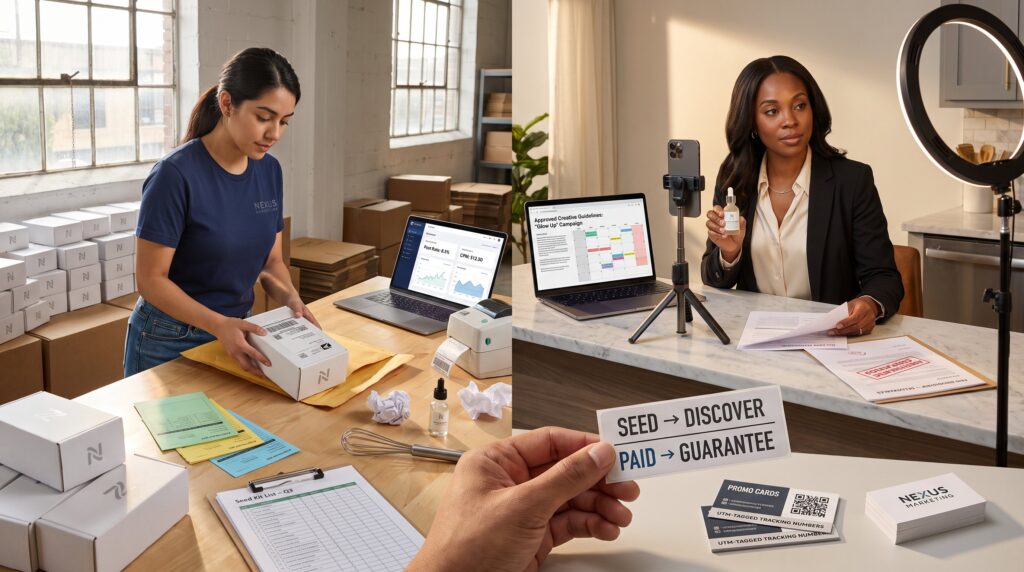
Product Seeding Platforms vs. Paid Sponsorship Platforms sit at opposite ends of the creator marketing spectrum in 2026. Brands choosing between the two must weigh cost, control, and the likelihood of authentic endorsement. This article lays out an evidence-driven, side-by-side view so marketers can decide when to seed product and when to pay for guaranteed content.
Key Takeaways
- Product seeding platforms offer cost-effective volume and authentic endorsements by sending free products to many creators without guaranteed posts.
- Paid sponsorship platforms provide control over messaging, guaranteed reach, and clear performance metrics through contractual agreements with creators.
- Choose product seeding to discover new advocates and maximize reach at lower CPMs, while selecting paid sponsorships for precise messaging and reliable ROI.
- Combining seeding and paid sponsorships enables brands to build long-term creator relationships and optimize marketing spend by converting top seeds into paid partners.
- Both approaches require transparent disclosure and compliance with legal guidelines to ensure brand safety and regulatory adherence.
- Smart brands use product seeding for authentic discovery and complement it with paid sponsorships to secure guaranteed content and measurable conversions.
Product Seeding Vs Paid Sponsorship: A Clear, Side-By-Side Comparison
Fact first: product seeding trades guaranteed posts for volume and discovery: paid sponsorship trades spontaneity for predictability and control.
Product seeding platforms manage sending free product to many creators with no posting obligation. A typical seeding program covers product cost, shipping, and modest platform fees. Brands often reach dozens or hundreds of micro-creators per campaign and pay far lower CPMs than paid campaigns. For example, a home goods brand might send 300 samples for the cost of 3 paid posts and receive 18 organic mentions within 60 days.
Paid sponsorship platforms handle fee-based campaigns with contracts, briefs, and deliverables. Brands book specific creators, define messaging and timelines, and obtain usage rights. One luxury skincare brand reported a 37% lift in direct conversions from a three-post paid package where each post included a coupon code.
When to pick which: choose seeding to discover advocates and stretch product cost across many creators: choose paid when precise messaging, guaranteed reach, and contractual protections matter.
Contextual link: brands building an ecosystem of alternatives and options often evaluate marketplaces and other channels: teams comparing options should review curated lists of influencer alternatives like trusted influencer alternatives when mapping vendor choices.
Performance Metrics: Cost, Reach, And Measurability
Core insight: seeding lowers cost per content but raises uncertainty in measurable outcomes: paid sponsorship raises cost per content but delivers clearer performance signals.
Seeding cost is primarily the product COGS plus shipping, packing labor, and platform fees. Many brands find seeding CPMs to be 40–70% lower than paid posts when measured per content piece. Key seeding metrics include post rate (percent of kits that result in at least one post), content volume, impressions, engagement rate, CPM, coupon/code conversions, and pipeline movement to later paid partnerships. A garden tools brand tracked 12% post rate after seeding 250 kits and measured a 0.9% conversion rate from unique coupon links.
Paid sponsorship metrics center on guaranteed impressions, clicks, conversions, cost per post, and creative A/B performance. Paid campaigns provide straightforward attribution when UTM links and promo codes are used. A seasonal paid campaign often reports immediate sales lift and easier ROI calculation, though total reach per dollar can be lower than mass seeding.
Practical warning: seeding programs can inflate vanity reach if many posts come from small, low-engagement accounts. Brands should track engagement quality and conversion UTM codes to avoid misleading CPM calculations.
Related reading on cost assessments appears in guides that compare platform pricing and total campaign cost, which can help teams model expected spend and outcomes.
Creator Relationships, Control, And Content Authenticity
Clear answer: seeding prioritizes relationship discovery and authenticity: paid sponsorship prioritizes control and consistent messaging.
In seeding, a creator posts only when they genuinely prefer the product, which often produces high-authenticity content. That authenticity converts: audiences perceive unscripted praise as more credible. But the trade-off is volume uncertainty, many kits never convert to posts. Brands use seeding to identify micro-influencers who later join affiliate or paid programs.
Paid sponsorships are transactional. Brands negotiate creative briefs, approve scripts or assets, and secure usage rights. This ensures brand-safe messaging and consistent campaign voice but reduces the spontaneous tone that drives some audience trust. Many brands combine both approaches: seed to discover authentic advocates, then offer paid contracts to high-performing creators.
Operational note: discovery tools and creator databases speed identification of advocates: teams should pair seeding with a discovery workflow to convert promising creators into deeper relationships. For further guidance on choosing between agencies and platforms for relationship work, teams often consult comparisons of influencer options when deciding how to run campaigns.
Long-Term Partnerships Vs One-Off Paid Posts
Direct insight: seeding builds long-term advocates: paid posts often drive short-term lift unless extended into multi-post deals.
Seeding programs function as a funnel. Many creators who receive free product will post once: a smaller subset, roughly 5–15% in many programs, becomes repeat advocates. Brands that track these advocates can convert them into affiliates, brand ambassadors, or paid partners. For instance, a kitchenware brand seeded 500 kits and signed 26 recurrent affiliates over 12 months.
Paid posts typically deliver guaranteed, time-bound reach. Brands may start with one-off paid posts to test creators and then scale promising partnerships into longer contracts. A smart play is to seed broadly, identify top performers by engagement and conversion, then negotiate paid series with the highest performers. That sequence reduces upfront paid spend and improves ROI on long-term sponsorship deals.
Negotiation, Contracts, And Deliverables On Each Platform Type
Bottom line: seeding usually needs little formal contracting: paid sponsorships demand clear, written agreements. This context pairs well with the site overview for readers who want more detail.
Seeding typically arrives without formal deliverables or guaranteed posts. Inventory receipts or simple terms of service cover basic liabilities. But, brands that want to scale should document consent for product use, disclosure expectations, and rudimentary usage rights to avoid misunderstandings.
Paid sponsorships require negotiation on fees, rights, timelines, and approval windows. Typical contract items: number of posts, content formats, usage rights (story, feed, paid amplification), exclusivity windows, and FTC-compliant disclosure language. Brands must budget legal review and contingency checks, for example, an agreement might include a 48-hour turnaround for content approvals and penalties for missed deadlines.
Practical lesson: many teams underestimate post-campaign usage rights. A furniture brand discovered it needed extended usage for paid ads after a campaign: having negotiated that upfront would have avoided a late add-on fee.
Legal, Brand Safety, And Creative Guidelines To Watch For
Key ruling: both seeding and paid sponsorships require transparent disclosure and claim substantiation to stay compliant.
Regulators like the FTC (U.S.), ASA (UK), and CMA (UK) require clear disclosure when content is gifted or paid. With seeding, brands should provide simple disclosure language in the kit and remind creators that a gifted product still needs honest, conspicuous disclosure. With paid sponsorships, contracts should specify the exact disclosure phrasing and placement.
Brand safety measures belong in contracts: restricted topics, prohibited endorsements, and mandatory content review windows. Creative guidelines should include substantiation for health or performance claims, for instance, any claim that vinegar removes mildew should be backed by testing if it appears in sponsored content. Noncompliance invites takedowns, fines, and reputational damage.
For playbooks on running compliant seeding programs and examples that drove measurable brand lift, teams can reference practical examples and guides that explain execution details and compliance in modern influencer programs.
Conclusion
Verdict: neither approach is universally best. Product seeding suits discovery, volume, and authenticity: paid sponsorship suits control, predictability, and direct attribution. Smart brands in 2026 run both: seed to find advocates, then invest paid budgets on the creators who drive real engagement and conversions. This blended strategy balances cost efficiency with reliable outcomes.