

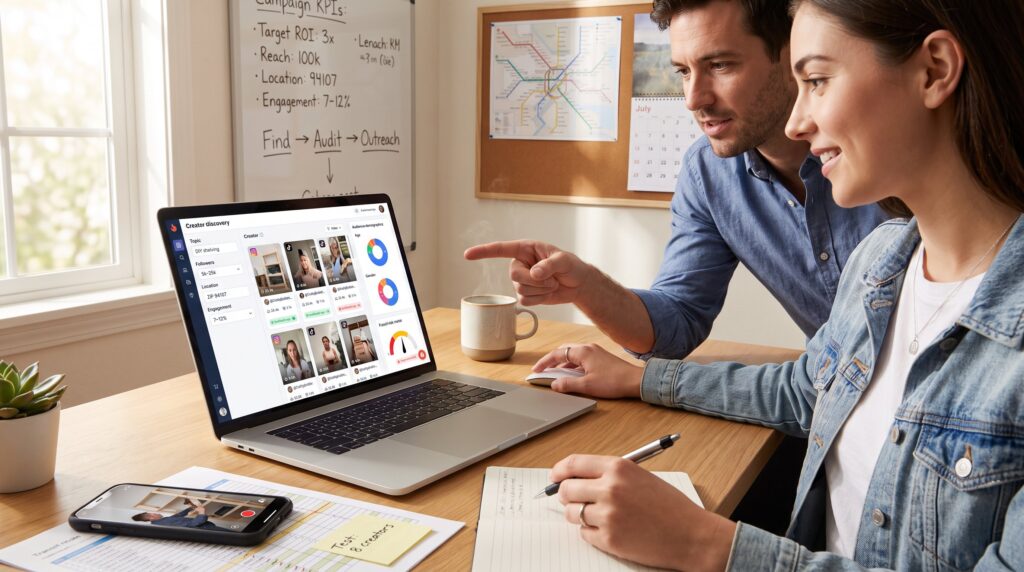
Creator discovery tools help small businesses find creators fast and reduce guesswork when launching influencer campaigns. In 2026, platforms index millions of creators across Instagram, TikTok, YouTube, and more, so the manual spreadsheet approach wastes time and misses high-value micro-influencers. This guide explains why these tools matter now, how a small team should choose one, and which products perform specific tasks best. Readers will get clear tests to run and realistic trade-offs for budgets under $500 per month.
Key Takeaways
- Creator discovery tools save small businesses significant time by reducing manual search hours to a fraction while revealing niche micro-influencers that boost campaign conversions.
- Small businesses should select creator discovery tools based on their primary KPIs and channels, ensuring the tool offers essential filters and audience authenticity checks to maximize campaign impact.
- Testing 2–3 discovery tools with identical search tasks and auditing creator authenticity helps small teams find cost-effective solutions under $500 that fit their specific marketing goals.
- Combining tools—using affordable platforms like Heepsy or InfluenceFlow for candidate sourcing followed by HypeAuditor for audience quality checks—balances budget constraints with fraud risk mitigation.
- Small businesses benefit from focusing on engagement rates and content relevance rather than follower count alone when choosing creators to ensure higher conversion potential.
- Ease of use, price, and tool capabilities like brand safety compliance and campaign integration are critical criteria for small teams to efficiently manage influencer marketing efforts.
Why Small Businesses Need Creator Discovery Tools Now
Fact: discovery tools turn hours of manual search into minutes and surface niche creators that drive real conversions. Small teams face three concrete problems: time scarcity, noisy platforms, and fraud risk. Time scarcity, a two-person marketing team typically spends 8–12 hours hunting creators per campaign: a discovery tool can cut that to 1–2 hours by providing filters and saved searches. Noisy platforms, TikTok and Instagram together host tens of millions of active creators, so manual browsing misses long-tail talent. Fraud risk, tools flag suspicious accounts: HypeAuditor-style analyses find inflated follower counts and bot comments that spreadsheets miss.
Example: a home-goods brand found 18 micro-influencers with 5k–25k followers and 7–12% engagement using a filter for “DIY shelving” and local ZIP codes, then converted 3 of them into paid campaigns that produced measurable sales. That outcome is repeatable when teams use filters for niche topics, follower range, and audience location. Small budgets benefit most: micro-influencers often charge 40–70% less per post and can produce higher engagement than larger creators.
Warning: not every tool is equal. Some databases lag on TikTok or lack robust authenticity checks. Before buying, small brands should validate sample searches and inspect raw audience samples to avoid wasted spend. For practical starter playbooks, the Tomoson article on influencer marketing for small businesses offers tactical steps to begin campaigns and set KPIs, which pairs well with a discovery tool once the team is ready: influencer marketing playbook.
How To Choose The Right Tool: Key Criteria For Small Teams
Insight: the right tool maps directly to the team’s top KPI and channel mix. First, define the KPI (sales, leads, awareness) and the primary channel (Instagram, TikTok, YouTube). A discovery tool only becomes useful if it supports attribution options like coupon codes, UTMs, or platform-specific tracking.
Discovery quality: prioritize filters that match campaign needs. Useful filters include niche/topic tags, follower bands, audience geography, language, and posting cadence. For example, a landscaping service should filter by location radius and “home improvement” topics to find creators within 50 miles who post video tutorials.
Audience authenticity: require fake-follower analysis and engagement-integrity signals. HypeAuditor-style scores and comment-audit samples reduce the chance of hiring accounts with 30–60% fake followers. Small teams should run sample authenticity checks on 10 candidate creators before outreach.
Brand safety and compliance: the tool should allow keyword exclusions, blocklisted categories, and a disclosure workflow to record sponsored content approvals. Audit trails save time during finance or legal reviews.
Ease of use and price: aim for intuitive UIs and trial periods. Many tools offer freemium or starter tiers under $200/month. If onboarding consumes more than two 90-minute sessions, the tool may be too heavy for a small team. For methods to compare total cost beyond subscription fees, see the practical model on comparing platform costs.
Test before buying: shortlist 2–3 platforms and run identical discovery tasks (find 8 creators who match your top performer). Measure time-to-list, quality of bios, and audience signals. Those three metrics predict whether the tool will save time and money.
Top Creator Discovery Tools For Small Businesses — What Each Does Best
Key point: different tools specialize. Below are clear pairings so small brands can pick based on need rather than hype.
InfluenceFlow, best for getting started on a budget. InfluenceFlow offers a freemium tier, basic filters, and simple campaign management. A small handmade skincare brand used InfluenceFlow’s saved searches to discover 12 niche creators in two weeks and tracked influencer coupon redemptions inside the platform. Strength: low barrier and integrated campaign workflows.
Heepsy, best for affordability and breadth. Heepsy indexes Instagram, TikTok, and YouTube with large coverage and fast search. It suits small teams who must cover multiple platforms without complex fraud reporting. A case: a furniture maker found local lifestyle creators by filtering city + audience size, then closed 4 product-review deals under $150 each. Heepsy is popular among small brands for this reason. For guidance on finding YouTube talent specifically, consult the Tomoson guide to finding YouTube influencers.
HypeAuditor Discovery, best for audience-quality analysis. HypeAuditor excels at fraud detection and audience authenticity scoring. It surfaces suspicious follower spikes and computes audience demographic splits. Use HypeAuditor when authenticity is mission-critical, such as B2B campaigns or regulated categories.
Influencity, best for advanced filters and growth focus. Influencity offers deep topic taxonomies, cross-platform reach estimates, and custom scoring. A growing e-commerce brand used Influencity to scale from 10 to 40 creator relationships in six months while maintaining top-line engagement rates.
Modash, best for workflow replacement. Modash replaces manual research with templated searches and CSV exports that plug directly into outreach tools. Teams that previously tracked candidates in Google Sheets report they save 3–6 hours per campaign when switching to Modash.
Practical note: combine tool strengths. For example, use Heepsy or InfluenceFlow to source candidates, then run HypeAuditor checks on finalists. That two-step approach balances cost and risk. If evaluating platform databases, Tomoson’s deep dive on evaluating a database offers criteria for sample checks: database evaluation tips.
Contextual resource: for brands exploring alternatives to marketplaces, a roundup of influencer platforms provides comparison ideas and model trade-offs: this is helpful when a team chooses marketplace vs. discovery-first tools: platform alternatives.
Conclusion: Picking And Testing The Right Tool For Your Goals
Takeaway: pick tools that map to KPIs, then validate with short discovery tests. A practical sequence: define KPI and channel, shortlist 2–3 tools under your budget, run identical searches for 8–12 creators, and audit audience samples for authenticity. Expect to iterate: most teams adjust filters twice before finding reliable partners.
Honest note: small teams often overvalue follower count. Instead, focus on engagement rate, content fit, and audience overlap with past customers. A disciplined test approach will reveal which tool consistently surfaces creators who convert.