

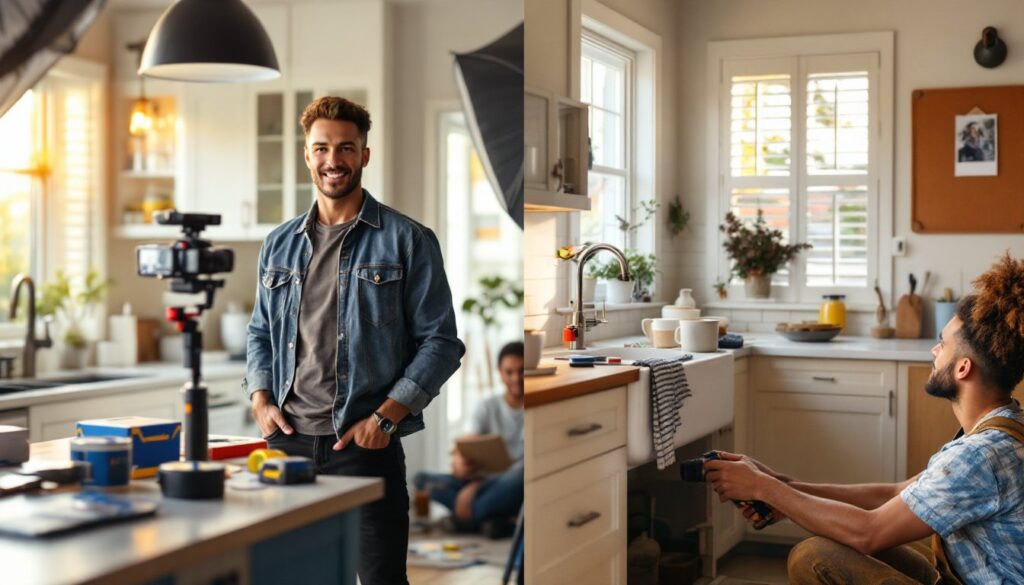
This guide is for homeowners, renters, and DIY brands who need a clear, tactical answer: when to hire a macro influencer and when to use micro creators to move product, drive bookings, or get qualified leads. It cuts past buzzwords and gives step by step criteria, real engagement benchmarks, and cost tradeoffs that matter for practical home improvement and DIY projects in 2026. Read this to pick the right partner fast and avoid wasted spend on vanity reach.
Key Takeaways
- Macro influencers have broad audiences (100K-1M followers) ideal for fast mass visibility and brand awareness campaigns.
- Micro influencers (1K-100K followers) engage niche, topical audiences with higher trust and conversion rates for targeted home improvement projects.
- Choosing macro vs micro influencers depends on goals: macros excel in national awareness; micros drive sales, bookings, and localized leads.
- Micro influencer campaigns are cost-effective with flexible payment models like affiliate commissions, suitable for brands with limited budgets.
- A balanced approach combines macros for inspiration and micros for detailed, trusted tutorials to maximize impact on home and DIY projects.
- Verify influencer engagement quality, audience relevance, and past content performance to ensure alignment with your project goals and budget.
What Defines Macro And Micro Influencers — Audiences, Metrics, And Typical Content
- Audience and follower ranges
- Macro influencers typically have 100,000 to 1 million followers. Their audiences are broad, often cross-region, and include a mix of hobbyists and casual viewers. They are effective when a brand needs mass visibility fast.
- Micro influencers normally fall between 1,000 and 100,000 followers. Their audiences are niche and topical, for example DIY bathroom upgrades, small-space renters, or weekend carpenters. That niche match drives better conversion in many home project scenarios.
- Common metrics to watch
- Engagement rate: For macro creators expect around 1 to 3 percent. For micro creators expect 3 to 8 percent and sometimes higher on hyper-niche accounts. Use engagement as the first filter for trust and response, not follower count.
- View-through rate and completion: Especially on TikTok and Reels, check video completion for tutorial-style content. High follower accounts can have low completion which hurts conversion.
- Audience geography and demographics: For home projects, local or regional relevance matters. Even a smaller influencer with a concentrated local audience can outperform a macro with scattered viewers.
- Typical content and production
- Macro creators deliver high-production Reels and YouTube content that scales awareness and lends aspirational credibility. They are useful for showcasing premium tools or national product launches.
- Micro creators produce step-by-step tutorials, time-lapses, before-and-after posts, and honest pros/cons. That format converts well for tools, finishes, and affordable appliances.
- Quick reference links
The distinctions above align with industry writeups about micro vs macro influencer and explain the practical differences in scale. For context on definitions and audience sizes consult resources on micro vs macro influencer and the more focused piece about micro influencer vs macro influencer.
Pros And Cons For Homeowners, Renters, And DIY Brands — Reach, Engagement, Cost, And Trust
Use this checklist to decide which model fits a use case.
- Reach
- Macro pros: Broad impressions for product launches, new store openings, or a national tool promotion. Good when the goal is discovery at scale.
- Macro cons: Lower relevance for niche renter audiences and higher CPMs. Many impressions are wasted if the audience is not homeowner-focused.
- Engagement and trust
- Micro pros: Higher conversation rates. Micro creators are often seen as peers and daily users of the tools they recommend which helps conversions on how-to content.
- Micro cons: Smaller absolute reach: you need multiple micro partners to match a single macro reach.
- Cost
- Macro: Expect higher flat fees, sometimes requiring talent agents, and limited room for affiliate or performance-based structures. For a one-off Reel or YouTube integration the price can be several thousand dollars.
- Micro: Lower upfront cost and more openness to product-for-post or revenue share. This is useful for scrappy brands and renters with limited budgets.
- Trust and long-term value
- Macro: Offers social proof and aspirational positioning that can lift brand perception quickly. It is effective for premium tools and national campaigns.
- Micro: Offers durable trust that drives repeat purchases and honest reviews. That makes micros especially useful for tutorial series and product comparison content.
- Specific audience notes
- Homeowners doing major remodels respond to a mix: macros for inspiration and micros for tactical how-tos.
- Renters prefer micro creators who show temporary, low-damage hacks and budget-friendly solutions.
- Additional reading
For a breakdown on micro influencer definition and what makes micro creator partnerships convert well, see the guide on micro influencer definition and the article on micro influencer brands.
How To Choose Between Macro And Micro Influencers For Specific Goals, Budgets, And Project Types
Step 1 Define the primary goal
- Awareness: If the campaign is a national product launch or brand-building for a premium tool, prioritize macro reach.
- Conversions: If the goal is sales, bookings, or store visits for a regional installer, prioritize micro creators and performance-based deals.
Step 2 Match budget to structure
- Low budget: Run a micro program. Offer product-for-post, affiliate commission, or tiered flat fees. This scales and keeps cash burn low.
- Medium to high budget: Mix in 1 to 2 macros to drive attention and use 6 to 12 micros to convert and validate the product in niche verticals.
Step 3 Choose by project type
- Small DIY hacks or renter-friendly changes: Micro creators who show quick wins and low-cost materials will perform better.
- Whole-home renovations or high-ticket appliances: Use macro creators for inspiration plus micro creators for the detailed walkthroughs that sell.
Step 4 Tactical checks before signing
- Ask for a content sample or past performance on similar projects. Prior performance is the best predictor of results.
- Verify audience with screenshots of analytics or Creator Marketplace insights on TikTok or Instagram. For basic education about follower tiers check guidance on how many followers does a micro influencer have.
- Confirm engagement quality by scanning recent comments. Look for genuine questions and owner-level language rather than one-word praise.
Step 5 Construct the deal
- For macros prefer a mixed fee plus a performance bonus tied to tracked promo codes or affiliate links.
- For micros use affiliate links, discount codes, and small guaranteed fees. This model minimizes upfront risk and aligns incentives.
Step 6 Execution cadence
- Launch with the macro asset and have micro creators publish complementary how-to content across the first 2 to 4 weeks to capture search and social discovery.
For further perspective on micro-first strategies consider resources on micro influencer marketing and the differences compared to nano creators in the nano vs micro influencer roundup.
Conclusion: A Practical Framework For Picking The Right Influencer For Your Next Home Project
Pick by goal, not ego. If the objective is rapid national awareness for a high-ticket product use a macro plus a micro support layer. If the objective is direct conversions, regional leads, or renter-friendly tutorials double down on micro creators and performance-based deals. The practical framework is simple: define the goal, align budget, verify audience, and structure payment toward measurable outcomes. Start small, measure a single KPI, and scale the mix that produces the best return.