

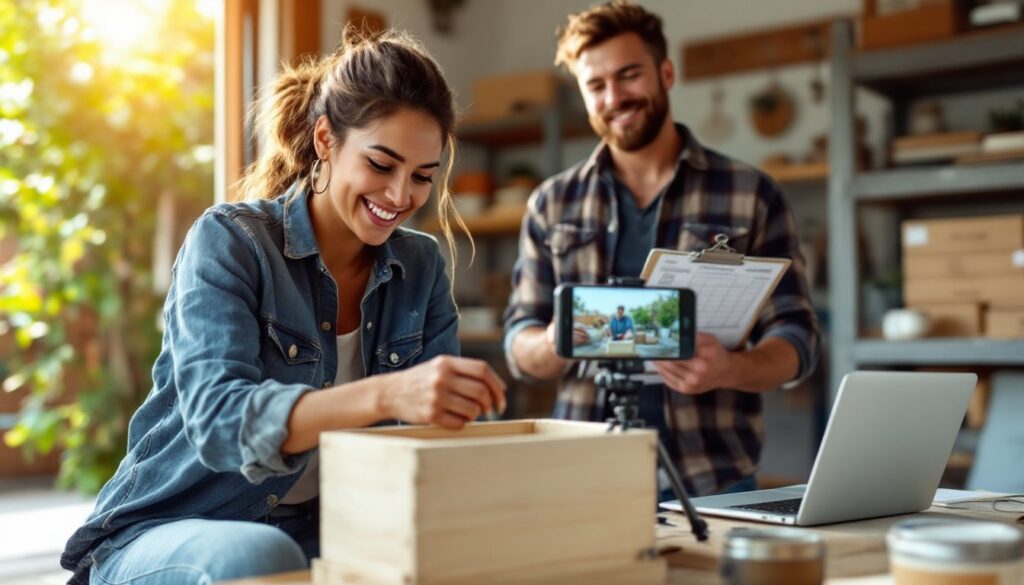
This playbook is for small home and DIY businesses that need customers, not vanity metrics. It lays out a lean, step by step process to discover, vet, and run micro-influencer partnerships that drive traffic and sales without a big ad budget. Readers will get concrete search workflows, filtering criteria, outreach scripts, and budget-friendly deal structures they can carry out this week.
Key Takeaways
- Influencer marketing for small business thrives by partnering with micro-influencers who have highly engaged, niche audiences ideal for driving local and DIY product sales.
- Set clear, measurable goals and define your target audience before outreach to ensure influencer campaigns align with objectives like sales or site visits.
- Utilize low-cost and effective outreach methods, such as gifting and affiliate commissions, to test multiple micro-influencers and identify the best ROI creators.
- Vet potential influencers by assessing their engagement rates, audience quality, and past brand collaborations to optimize campaign success.
- Use tracked links or unique coupon codes to measure the return on investment and treat influencer partnerships as an optimizable traffic source.
- Scale your influencer marketing by doubling down on top-performing creators and maintaining a test-and-learn approach within your budget.
Why Influencer Marketing Works For Small Home And DIY Businesses
Influencer marketing scales for small home and DIY businesses because niche reach beats mass reach for purchase intent. Small creators often serve focused audiences defined by geography, hobby, or life stage. A local woodworking creator with 4,000 followers in the same metro will convert better for a neighborhood hardware shop than a national ad campaign.
Key reasons it works:
- Higher engagement from smaller creators. Micro and nano creators (1K to 100K followers) routinely post content that drives 2 to 5 percent engagement on Instagram and up to 11.9 percent on TikTok for very engaged niches. That engagement translates into click-throughs and purchases when the product fits the audience.
- Lower cost and faster testing. Many creators will accept product gifting or small flat fees in the $25 to $500 range per post. That makes it feasible to run 10 to 20 small tests to find what resonates before scaling spend.
- Content that behaves like customer proof. User-created projects, before-and-after clips, interactive product presentations, and how-to clips resonate with DIY buyers. This content converts because it shows the product working in a real environment and answers practical questions potential customers have.
Practical note: small businesses that want predictable returns treat influencers like a traffic source you can optimize. Use the playbook below to move from discovery to repeatable partnerships instead of one-off posts that generate noise but no orders. Also consider combining this channel with an optimized product page and a simple UTM or coupon so ROI is measurable. For strategy reference and campaign inspiration consider reading how small brands scale faster through brands and review practical influencer marketing campaign ideas.
Set Clear Goals, Target Audience, And A Realistic Budget
Before outreach, document three things: objective, audience, and budget. Keep this lean and measurable.
- Objective. Pick one primary KPI: sales, site visits, or email signups. Examples: “50 orders in 30 days” or “500 tracked visits from influencer links.” Avoid vague goals like “brand awareness.”
- Audience. Define the audience by intent and platform. For DIY projects aimed at hands-on homeowners, prioritize TikTok and YouTube for how-to video formats. For local businesses or high-AOV home services, use Instagram creators with local followings and neighborhood hashtags.
- Budget. Choose a model and total spend. If budget is under $1,000, plan a gifting-based pilot: 8 to 12 gifted units plus a $200 contingency for small fees. If $1,000 to $5,000 is available, split between paid posts and affiliate commissions. Benchmarks:
- Nano influencers (1K to 10K): $5 to $200 per post, high engagement.
- Micro influencers (10K to 100K): $200 to $1,000 per post, broader reach.
Decide measurement now. Use unique coupon codes or tracked links. If uncertain how to measure ROI, consult a practical guide on how can a business assess the roi from influencer marketing. Also align this plan with a larger influencer marketing strategy so pilots feed into a repeatable process.
Quick budgeting tip: treat the first 10 influencer relationships as experiments. Track cost per conversion and drop creators whose CPA is above your target. Reinvest in creators who outperform. This is how small brands scale faster without pouring money into unproven creators.
Find, Vet, And Partner With Micro-Influencers (Step-By-Step)
This section is the actionable workflow from discovery through deal. Follow the exact steps and templates below.
Discovery: manual first, tools second
- Manual search workflows (high signal, low cost)
- TikTok: search hashtags, sounds, and the Creator Marketplace if available. Use hashtags like #DIYProject, #HomeRenovation, and add city tags. Save creators who post step-by-step builds with good watch times.
- YouTube: search for “how to” videos in your niche plus locality when relevant. Check suggested videos on top-performing uploads to find niche channels.
- Instagram: use the Explore tab and niche hashtags. Search for posts tagged with local business names or project-related tags. Micro creators who tag products or local stores are ideal.
- Fastest way to find creators
- Run a quick TikTok search for your product plus “before and after” and save accounts with frequent DIY uploads. For broader reach, use curated lists under influencer marketing on instagram or targeted reading on youtube influencer marketing.
Filtering and vetting checklist (do these before outreach)
- Audience match: review 10 recent posts. Look for comments that indicate real interest: questions about price, tools, or local availability.
- Engagement rate: calculate likes plus comments divided by followers. Micro targets: 2 to 5 percent on Instagram, higher on TikTok for niche content.
- Video performance: on TikTok and YouTube, watch completion rate and how many saves/shares. A shaky production with high saves can outperform polished ads.
- Follower quality: scan follower accounts for bots. If many followers have no profile picture or zero posts, flag for further review.
- Past brand work: creators who have worked with small businesses before understand logistics and delivery timelines. If unsure how to evaluate, compare creators to examples of influencer marketing campaign ideas.
Outreach: templates that work
- DM template for gifting
- Short intro: two lines about the brand and why their content fits.
- Offer: specify the product, shipping timeline, and expected content (one unedited clip or photo plus usage rights for ads).
- Call to action: ask for a media kit or rate card.
- Email template for paid or affiliate deals
- Subject: “Paid collab idea for [creator handle], local DIY product”
- Body: 3 sentences on offer, one sentence on tracking and fee range, and one question about availability.
Deal structures: choose one and stick to it
- Gifting plus affiliate: give product and offer 10 to 20 percent commission on tracked sales. Best for low-budget pilots.
- Flat fee plus usage rights: pay $100 to $1,000 depending on reach and require 30-day usage rights for paid ads. Use this when you plan to amplify the creator’s content.
- Performance-only: pay tiered commissions and bonuses for milestones. This reduces upfront spend but requires reliable tracking.
Scale: run 10 to 20 small tests, track performance per creator, and double down on the top 20 percent. If managing multiple creators becomes time consuming, consider whether an external influencer marketing firm is worth the cost for sourcing and negotiating.
Conclusion
Start with a strict test budget, use tracked links or coupons, and prioritize creators who produce repeatable, shoppable content. Over time, allocate more budget to creators with the best cost per acquisition.