

Sleeping with the mouth open is common, but for gamers it’s more than a nighttime quirk, it can wreck sleep quality, morning focus, and recovery after late-night sessions. This guide explains why mouth breathing happens, the real performance costs (reaction time, shaders of fatigue), practical treatments you can try at home, and gamer-specific prevention tips so playlists and ranked runs don’t suffer. Recommendations are evidence-informed and framed for people who want straightforward fixes they can test tonight.
Key Takeaways
- Sleeping with the mouth open often results from nasal airway blockages like congestion or a deviated septum, causing mouth breathing as a compensatory mechanism.
- Mouth breathing during sleep reduces nitric oxide delivery, leading to poorer oxygen uptake, fragmented sleep, and impaired reaction times important for gamers.
- Simple at-home treatments such as nasal saline rinses, nasal strips, humidifiers, and chin-tuck taping can effectively reduce mouth breathing and improve sleep quality.
- Behavioral changes like side sleeping, elevating the head, and oral exercises that promote proper tongue and lip posture help prevent mouth breathing over time.
- For persistent symptoms or signs of obstructive sleep apnea, professional evaluation with ENT or sleep specialists is essential for targeted interventions.
- Gamers should integrate sleep hygiene practices and track sleep patterns consistently to optimize recovery, performance, and decision-making during gameplay.
Why Do People Sleep With Their Mouth Open? Common Causes Explained
Mouth breathing during sleep usually comes down to airflow and resistance. When the nasal airway is blocked or narrow, the body defaults to the mouth because it’s the path of least resistance.
Common, measurable causes:
- Nasal congestion, Allergies, recent colds, or chronic rhinitis increase nasal resistance. Objective measure: peak nasal inspiratory flow drops in congestion.
- Deviated septum, A structural issue where the septum blocks one side: often requires ENT assessment and is visible on nasal endoscopy or CT.
- Enlarged turbinates or adenoids, Especially in younger players or those with childhood breathing issues: adenoids can be confirmed with lateral neck X-ray.
- Nasal valve collapse, Weakness in the external nasal valve that increases collapse on inspiration, noticeable on physical exam.
- Habitual/open-mouth posture, Long-term mouth breathing (during daytime) trains the jaw and tongue to rest forward, which carries over to sleep.
- Obstructive sleep apnea (OSA), Not all mouth breathing equals OSA, but many with OSA breathe through the mouth when apneas or partial obstructions occur. Confirmed by polysomnography and AHI (apnea–hypopnea index).
Less common causes include certain neuromuscular disorders, medications that relax muscles, or high alcohol intake before bed increasing airway collapsibility. For gamers: extended headphone use, jaw tension from clenching during sessions, or sleeping with poor pillow height can nudge someone toward mouth breathing. If breathing problems co-occur with loud snoring, daytime sleepiness, witnessed apneas, or morning headaches, a formal sleep study is warranted.
How Mouth Breathing Harms Sleep Quality And Daytime Performance
Mouth breathing changes breathing physiology in ways that matter for performance and recovery. It reduces nitric oxide delivery (produced in the nasal passages), which normally helps vasodilation and oxygen uptake. Less nitric oxide means marginally reduced oxygenation and poorer exercise recovery, noticeable for players who do physical warm-ups, IRL practice, or multi-hour sessions.
Key measurable impacts:
- Reduced slow-wave sleep and REM fragmentation: Studies show increased arousals with oral breathing, raising sleep fragmentation index.
- Higher dry mouth and throat irritation: This increases micro-awakenings and can raise perceived sleep disruption.
- Increased risk of upper airway inflammation and dental issues: Dry mouth raises cavity risk and periodontal disease over months to years.
For gamers specifically:
- Reaction time and aim: Fragmented sleep impairs reaction time and target tracking: laboratory research links poor sleep continuity to slower psychomotor vigilance test (PVT) performance.
- Decision-making under tilt: Sleep fragmentation worsens emotional regulation and risk-taking, which affects clutch decisions in ranked play.
- Recovery metrics: Resting HRV and sleep-stage balance (measured on consumer wearables) often show lower parasympathetic activity after nights dominated by mouth breathing.
Not every night of mouth breathing equals clinical impairment, but repeated disruption compounds and reduces consistency, the enemy of improving K/D, mechanics, and ladder climb.
Practical Treatments And At-Home Fixes To Keep Your Mouth Closed
Start with low-risk, reversible tricks and work up if symptoms persist. These strategies are suitable for nightly experimentation and can be combined.
Immediate at-home fixes:
- Nasal saline rinses, Use isotonic saline (neti pot or squeeze bottle) once daily to reduce congestion. Gamers report clearer breathing within 20–30 minutes.
- Nasal strips (external), Brands that widen the nasal valve mechanically can reduce resistance and are usable on all platforms (PC/console nights). Put one on before long sessions or sleep.
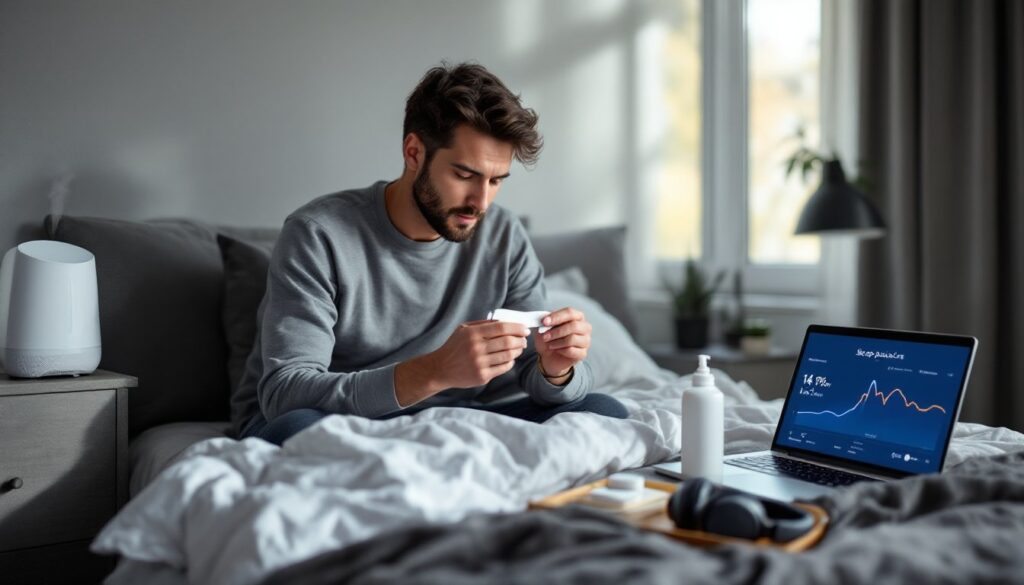
- Humidifier, Dry bedroom air (common with HVAC) increases mouth breathing. Keep relative humidity around 40–50% to reduce throat dryness and irritation.
Behavioral / positional fixes:
- Chin-tuck taping, A small strip of medical tape (hypoallergenic) across the lips to keep them gently closed. Use trial nights to test comfort: don’t tape if claustrophobic or if they have severe nasal obstruction. Always allow easy removal.
- Sleep position, Elevate head by ~10–15 degrees (thin wedge pillow). Side sleeping reduces airway collapse compared with supine for many people.
- Oral myofunctional exercises, Target tongue posture and lip seal. Examples: 20 repetitions of lip closures, tongue “suction” to the palate, and swallowing drills twice daily for 6–8 weeks can reduce daytime open-mouth posture. Clinically shown to help mild cases.
When to see a pro:
- If snoring is loud, apneas are witnessed, daytime sleepiness is pronounced, or conservative measures fail after 4–6 weeks, refer to ENT or sleep medicine. Diagnostics: nasal endoscopy, septoplasty discussion, turbinate reduction, or polysomnography if OSA is suspected.
Devices with clinical evidence:
- Mandibular advancement devices (MADs), Custom or OTC varieties advance the jaw and can reduce mouth breathing tied to airway collapse. Fit and dentist follow-up matter for long-term use.
- CPAP, For confirmed OSA, CPAP often resolves mouth breathing overnight, though mask fit and leak management are crucial for gamers who might nap with a headset on.
Safety note: Avoid restrictive taping if respiratory compromise is present. When in doubt, get a clinician triage.
Prevention Tips Tailored For Gamers: Sleep Hygiene, Timing, And Recovery
Gamers need both targeted fixes and consistent habits to prevent mouth breathing from returning after late-night matches.
Pre-sleep checklist for nights with ranked matches or long streaming sessions:
- Wind-down window: Finish intense play 60–90 minutes before intended sleep. This reduces sympathetic arousal and jaw clenching.
- Hydration strategy: Drink water earlier: avoid large volumes right before bed. Dehydration increases mouth dryness: over-drinking prompts awakenings.
- Avoid alcohol and sedative meds close to sleep: They increase airway collapsibility and raise odds of mouth breathing and apneas.
Bedroom setup and ergonomics:
- Pillow choice: Use a medium-firm pillow that supports cervical alignment. Gamers who sleep with elevated shoulders because of headset cords often end up chin-forward, adjust cord routing and pillow height.
- Ambient noise vs. fans: Low continuous noise is fine, but fans that blow directly at the face can dry mucosa. Reposition or use angled airflow.
Training and tracking:
- Night-by-night tracking: Use a sleep tracker or smartphone app that records snoring or mouth-open indicators. Aim for a 14-night baseline and then log changes when trying interventions.
- Recovery focus: If post-session HRV drops or resting heart rate is elevated, prioritize interventions that restored nasal breathing: improved HRV often follows better sleep continuity.
Small habits that help:
- Chew and jaw mobility: 5 minutes of controlled chewing (sugar-free gum) during the day improves jaw muscle tone and reduces day mouth-breathing.
- Screen and stim timing: Blue-light filters and low-brightness modes in the last hour help sleep onset, and less time grinding on a boss fight reduces tension that can carry into sleep posture.
Platform notes: Console or PC players who nap in chairs should avoid slumped head positions: mobile gamers tend to curl necks, both positions encourage mouth opening.
Conclusion: Pick A Plan, Track Progress, And Get Better Sleep
Mouth breathing is fixable in many cases with simple, measurable steps: clear the nose, support the airway, retrain tongue and lip posture, and adjust sleep setup. Gamers should treat this like a patch cycle, pick one low-risk fix (saline rinse + nasal strip + humidifier), track two weeks of nights, then add an exercise or chin-tape trial if needed.
For persistent or severe signs, loud snoring, gasping, daytime sleepiness, or performance drops, seek ENT or sleep-medicine evaluation (polysomnography, nasal endoscopy). Small changes yield reliable gains: better REM balance, clearer mornings, and improved reaction times during matches. Commit to measurement, iterate like a build order, and the sleep ROI will show up in-game and IRL.