

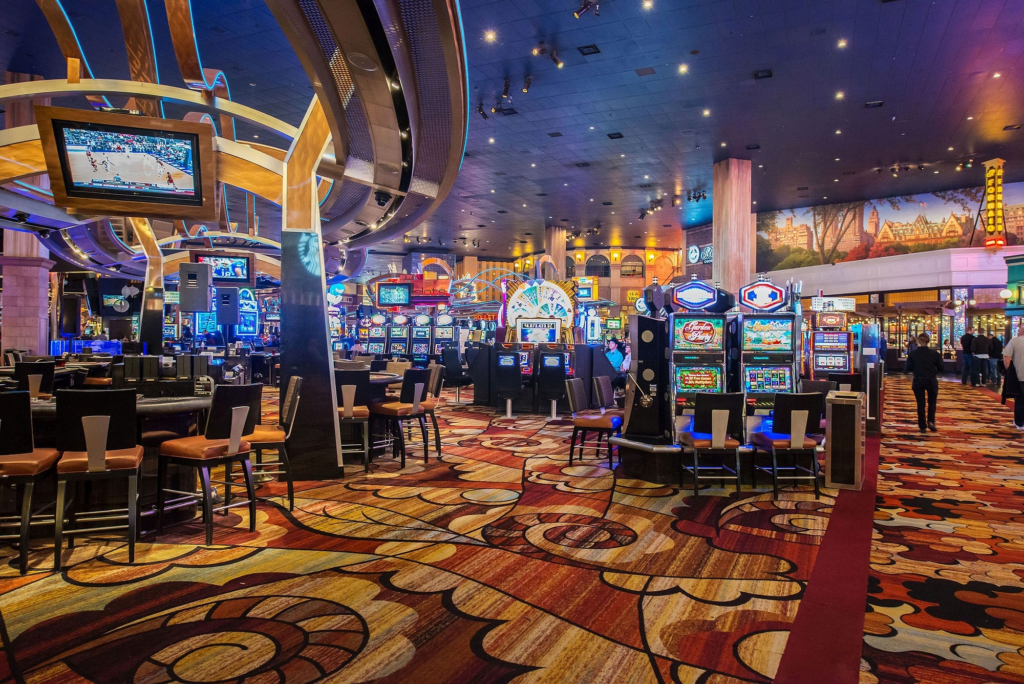
Walk into almost any casino and your eyes are assaulted before you have placed a single bet, not by the lights or the noise, but by the floor. Swirling reds, clashing golds and dizzying geometric patterns stretch off in every direction, in a style no one would ever choose for their living room.
That ugliness is not an accident of taste, and it is certainly not the work of a designer having a bad day. Casino carpets are among the most calculated surfaces in the building, engineered to solve a surprising number of problems at once.
The Carpet That’s Too Ugly To Be An Accident
The first clue that something deliberate is going on is the sheer consistency of it. Casinos on opposite sides of the world, with completely different themes and budgets, all seem to land on the same loud, chaotic aesthetic, which is not how random bad taste works.
These patterns are the product of extensive research and considerable expense, chosen with the same care as the games and the lighting. The look is the point, because every element of that busy design is doing a job, even if the effect on a first-time visitor is mild bewilderment.
It is a purely physical trick that has no equivalent online, which is part of why the two experiences feel so different. A site like richard casino has no stains to hide or floor to fill, so the same goals of holding attention and setting a mood are handled entirely through screen design instead. On a real gaming floor, the carpet has to do that work underfoot.
Hiding A Thousand Stains
The least glamorous reason is also the most important, and it is simply dirt. A casino floor is crossed by thousands of people every day, many of them carrying cocktails, food and whatever they have tracked in from outside, which is a recipe for constant spills.
A plain, pale carpet would look filthy within hours under that kind of punishment. A fragmented, multicoloured pattern, by contrast, visually swallows stains, so the spill you never notice on a casino floor is not the result of superhuman cleaners but of a design built to camouflage it. Carpet also earns its place acoustically and visually, since a thick pile absorbs the roar of a busy floor into something bearable, while a matte weave cuts the glare bouncing off thousands of bright machines.
Built To Survive The Traffic
The same relentless footfall creates a second problem, which is wear. On a plain surface, the flattened trails between popular machines would appear within weeks, leaving tired, obvious paths across the room.
Busy patterns disguise that wear just as effectively as they hide stains, stretching the life of an expensive floor. Even so, the traffic is punishing enough that major properties replace enormous quantities of carpet regularly, with one large resort swapping out around a hundred thousand square feet at a time and recycling the old material into padding.
Keeping Your Eyes Off The Floor
Beyond the practical, there is a more debated psychological theory, and it is the one that gives these carpets their reputation. The idea is that a floor covered in aggressive, uncomfortable patterns is genuinely unpleasant to look at for long.
Faced with that visual discomfort, the theory goes, your eyes naturally lift away from the ground and back up to the only things designed to please them: the glowing slot reels, the card tables and the flashing jackpot signs. The busy floor gently discourages you from looking down, drifting off or feeling relaxed enough to call it a night.
There is some academic weight behind the broader principle, with research from the University of Guelph finding that the visual design of a casino measurably affects players’ emotions, their intention to gamble and how long they stay. Whether the carpet specifically is engineered for that effect, however, is exactly where the story gets contested.
Pattern, Density And Mood
What is beyond doubt is that the design of the pattern is used to shape the atmosphere of different areas. Casinos do not use one carpet throughout, but vary the busyness and contrast to match what each space is meant to do.
|
Pattern choice |
The effect it creates |
Where you find it |
|
Busy, high-contrast motifs |
Lifts energy and pushes the eye up to the games |
On the main gaming floor, around slots and tables |
|
Calmer, larger patterns |
Slows the pace and soothes the mood |
In lounges, restaurants and rest areas |
|
Dark outlines in the weave |
Swallows spills and disguises dirt |
Everywhere foot traffic is heaviest |
|
Tonal, muted textures |
Hides wear without the garish look |
In high-end and luxury properties |
The logic running through the table is that contrast and density control energy. Tight, high-contrast patterns keep players alert where the money is, while calmer designs let people wind down in the spaces built for resting, which shows just how intentional every choice really is.
The Sceptics Push Back
For all the talk of mind control, plenty of industry insiders think the psychological story is overblown. According to some Las Vegas designers, the notion that carpets are built to keep gamblers awake or disoriented is more urban legend than strategy.
Their argument is that the real reasons are the mundane ones, hiding stains, surviving traffic and reinforcing the brand, and that the rest is a myth people enjoy repeating. It is a fair challenge, and the honest answer is that both can be partly true, with practical needs driving the design and any effect on player behaviour being a welcome bonus rather than the master plan.
One point the sceptics make is oddly memorable. The patterns are so distinctive that police have released crime-scene photos showing only the carpet to keep a location secret, only for people online to identify the exact casino instantly, which says a great deal about how recognisable these floors have become.
The Quiet Luxury Version
If loud carpets worked purely through discomfort, the most expensive casinos would use the loudest of all, yet the opposite is true. High-end properties tend toward calmer, more tasteful floors, which complicates the simple keep-them-awake theory.
The trick is that luxury venues still use the same underlying tools, just in a more refined register. Monochromatic textures and subtle tonal patterns hide wear and stains and reinforce a sense of place every bit as effectively, all without the garish clash of a classic gaming floor.
The reasons a casino carpet looks the way it does therefore cluster into a few clear motives:
- Concealment — busy patterns hide the spills and stains that heavy traffic guarantees.
- Durability — the same designs disguise the wear that would age a plain floor in weeks.
- Atmosphere — pattern density and contrast are tuned to energise or calm each area.
- Branding — a distinctive floor becomes an instantly recognisable part of a casino’s identity.
Seen together, these explain far more about the loud carpet than the single dramatic theory ever could, since the floor is solving several problems at once rather than just one.
More Than Just Bad Taste
The next time a casino floor offends your eyes, it is worth appreciating how hard that carpet is working. It hides stains, survives punishing traffic, shapes the mood of each room and brands the space, all while quietly nudging your gaze up toward the games.
Whether it also keeps you gambling longer is genuinely debated, but the practical genius underfoot is not. Those games are still designed for the house to win, so anyone who finds their play becoming hard to control can seek free, confidential support from services such as GamCare or the National Council on Problem Gambling.
FAQ
Why are casino carpets so ugly and busy?
Mainly for practical reasons. Loud, multicoloured patterns hide the spills and wear from heavy foot traffic, help reinforce the casino’s brand, and are chosen through careful research rather than poor taste.
Do casino carpets really keep people gambling?
It is debated. One theory says uncomfortable patterns lift your eyes toward the games, and research links casino design to player behaviour, but many insiders call the carpet version a myth.
How often do casinos replace their carpets?
Frequently, because of constant foot traffic. Large resorts can replace around a hundred thousand square feet of carpet at a time, sometimes recycling the worn material into padding rather than sending it to landfill.
Why do luxury casinos have calmer carpets?
They use refined versions of the same idea. Tonal, muted patterns still hide stains and wear and set a mood, but project elegance instead of the garish look of a traditional gaming floor.