

Even with new marketing channels popping up almost everyday, email marketing remains one of the most effective ways to engage customers, build brand awareness, and drive sales in the tech industry.
However, there’s a big caveat.
Many tech companies—despite their vast knowledge of the digital space—still fall into common email marketing traps that hinder their success. We’re talking about tech companies that commit mistakes that can lead to wasted efforts, missed opportunities, and even damaged reputations.
In this article, we’ll explore some of the most common email marketing mistakes tech companies make and provide actionable solutions to help you avoid them.
Mistake #1: Ignoring email deliverability issues
One of the most common mistakes tech companies make is neglecting email deliverability. See, if your emails aren’t reaching the inbox, they’re not being seen or read. If they’re not being read, they won’t generate the results you’re aiming for—appointments, calls, or booked demos.
Many tech companies focus solely on the content and design of their emails, but without proper attention to deliverability, even the best-crafted message may never make it to the intended recipient.
Solution: To ensure your emails are landing in inboxes and not getting rerouted to spam folders, it’s crucial to monitor your email reputation. This involves checking metrics like domain health, Barracuda sender reputation, and bounce rates. Regularly running an email deliverability test can help you see where you currently stand in terms of deliverability.
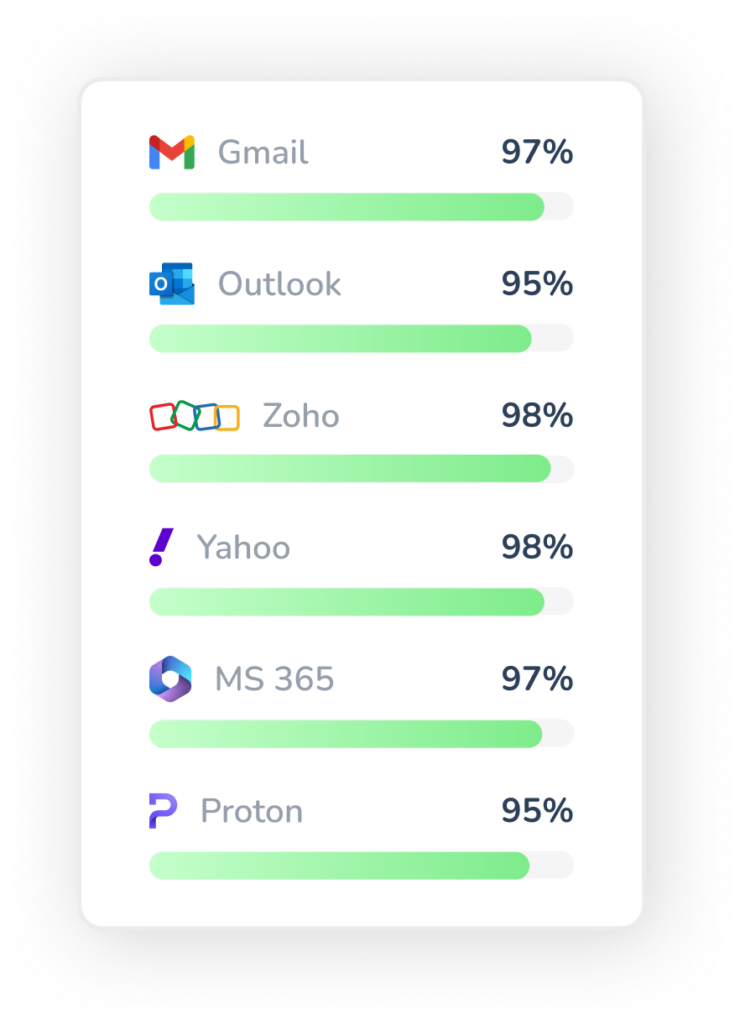
Example: Warmy’s email deliverability test gives you a comprehensive view of how well your emails are performing across various providers. It shows you if your emails are landing in inboxes or spam folders of email service providers (ESPs) like Gmail, Yahoo, or Outlook. This will allow you to identify any issues early and take proactive steps to resolve them, ensuring higher engagement rates.
Mistake #2: Sending generic emails
The days of “spray and pray” are long gone. Today, generic, one-size-fits-all emails are more likely to be ignored or even marked as spam. Some tech companies often rely on broad email campaigns that lack personalization, which feel impersonal and irrelevant to recipients.
Solution: Personalization is key to effective email marketing. Take the time to segment your audience so you can tailor your email content based on their interests, behaviors, and previous interactions with your brand. Personalized emails are more likely to engage recipients and build stronger connections.
Including the recipient’s name, company, or other personalized details can already do so much to increase open rates and click-through rates. Additionally, using dynamic content that changes based on the recipient’s profile or preferences can further improve engagement.
Mistake #3: Not optimizing for mobile devices
This is a fact: your recipients are opening your emails on different devices. That’s why it’s surprising how many tech companies still tend to neglect mobile optimization. When you don’t optimize your emails for mobile or tablet, this can lead to clunky user experiences—unreadable content, broken links, and frustrated recipients. These same results can then lead to senders being reported as spam.
Solution: Use responsive email templates that automatically adjust to different screen sizes. Keep your email copy concise, use large fonts, and ensure buttons and links are easy to click on mobile devices.
Mistake #4: Poor email sign offs
A common but often overlooked mistake is using generic or unprofessional email sign offs and email signatures.
The sign off is the last impression you leave with your recipient, so it should reflect your brand’s tone and professionalism. A weak or irrelevant sign-off can leave a negative impression and hurt your brand’s credibility.
Solution: To create a lasting impression, your email sign off should be both professional and friendly. It should also reflect your company’s personality. Additionally, including your contact information or social media links in your email signature can provide more opportunities for engagement.
Mistake #5. Skipping the warmup process entirely

We get it—it’s exciting to dive head first into email marketing. However, this is another common mistake committed by tech companies. They start sending large volumes of emails right away.
Cold emailing with a new domain or email account can severely impact your sender reputation, resulting in poor deliverability, high bounce rates, and being flagged as spam. Some companies assume they can just send emails right away, but this approach can harm their email marketing efforts in the long run.
Solution: Don’t skip the warmup process! This means gradually increasing the volume of emails you will send from new accounts or domains. This helps to establish trust with email service providers (ESPs) and builds the reputation of your domain for future activity.
Using a tool like Warmy automates the warmup process so you don’t have to manually manage the sending and tracking. The tool ensures that your email accounts are properly warmed up, allowing you to safely ramp up your email outreach while protecting your sender reputation.
Wrapping up: Mastering email marketing for tech companies
Remember, email marketing is an ongoing process, and continuous optimization is key to staying ahead of the competition. Using tools like Warmy’s email deliverability test is a great first step to help your tech company optimize email campaigns and build lasting connections with clients and prospects. Take your test today—it’s free and only takes a few minutes.