

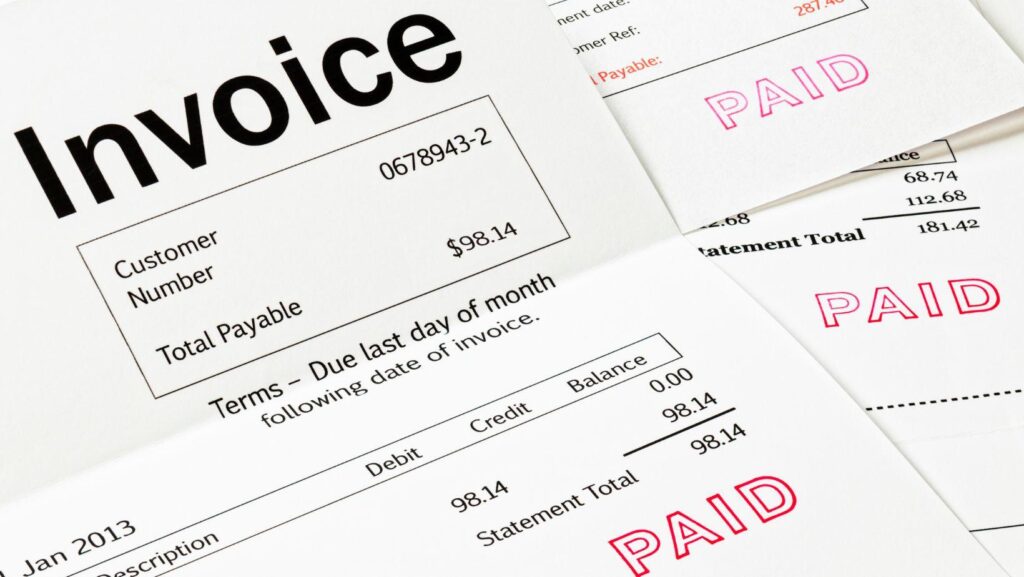
Accounts payable teams and finance departments process a relentless influx of non-standardized documentation. Manually keying line items from highly variable document types creates operational bottlenecks that drain productivity and introduce human error.
The scale of this challenge has made data extraction a critical enterprise investment. The global data extraction software market reached $1.38 billion and is projected to grow to $3.99 billion by 2031, at a 9.8% compound annual growth rate. The reason is clear: AI-powered extraction delivers over 99% accuracy on complex documents, compared to 70–80% for legacy optical character recognition (OCR) systems, while reducing operational processing costs by 80% or more.
To address this, enterprises deploy dedicated data extraction vendors to transform variable transaction documents into organized, verifiable business data. This shift depends on modern AI document processing frameworks that replace rigid templates with flexible deep learning architectures.
1. ABBYY
Training AI models used to take weeks of tedious manual labeling, but ABBYY changes the game with its purpose-built multimodal model (Phoenix 1.0) and zero-shot learning. Designed to automate data extraction across structured forms, semi-structured invoices, and unstructured contracts in over 200 languages, ABBYY auto-suggests extraction fields from the very first document. This slashes setup friction so teams achieve high-accuracy data capture almost instantly. To back it up, ABBYY provides scalable, SLA-backed support, giving enterprises peace of mind with continuous uptime and direct expert guidance whenever they need it.
Best For: Innovation leaders who want cutting-edge GenAI and multimodal document processing without spending months on model setup.
Key Highlight: Zero-shot learning & automatic field detection via Phoenix 1.0.
2. Rossum
Rossum approaches accounts payable document intelligence from a specialized, cloud-native stance engineered for total hyperautomation.
How it processes: Rossum abandons classic template-matching entirely, operating on a specialized Transactional large language model (LLM) trained on millions of real-world corporate transactions. It reads invoices and receipts conceptually, exactly like a human accountant would, letting it accurately parse highly irregular, net-new formatting variations on the very first try.
The AI advantage: Rossum addresses the modern regulatory shift by integrating automated compliance validation for global electronic invoicing mandates (such as Europe’s ViDA and regional tax rules). Its software includes built-in line-item matching and proactive anomaly detection to flag duplicate or fraudulent vendor receipts in real time.
Integrations: Extensively cloud-integrated with direct data syncs into Workday, SAP, Oracle NetSuite, and Coupa.
3. Hyperscience (Hypercell platform)
The Hyperscience Hypercell platform is engineered specifically for hyper-regulated, complex enterprise workflows where operational accuracy constraints are non-negotiable.
How it processes: Hyperscience leverages specialized deep learning models tailored around high-volume, messy operational files. It easily parses handwritten totals, low-resolution receipts, and crumpled or multi-page logistics packing lists.
The AI advantage: The platform focuses on straight-through processing (STP) targets, consistently hitting up to 98% automation thresholds. It includes highly intuitive, structured human-in-the-loop validation screens, ensuring manual verification triggers only when data drops below strict, user-defined confidence baselines.
Integrations: Built primarily for secure private clouds and enterprise infrastructures, integrating directly with core banking and transport management systems.
4. Google Cloud Document AI (Procurement DocAI)
Google Cloud delivers an enterprise-scale data pipeline through specialized, domain-specific endpoints powered directly by Google’s foundational machine learning frameworks.
How it processes: Inside its modular Document AI platform sits the specialized Procurement AI suite. This engine features highly optimized models trained explicitly to extract over a hundred specific financial entities from multinational invoices and retail receipts.
The AI advantage: Backed by underlying Gemini multimodal processing, Google excels at stabilizing problematic real-world user imagery. It automatically corrects camera angles, cleans up background shadows from smartphone uploads, and handles organic handwriting scripts with low error rates.
Integrations: Operates as a developer-first cloud API, letting engineers connect it to any enterprise framework capable of processing REST requests.
5. Amazon Web Services (AWS Textract)
Amazon Textract provides a serverless machine learning approach to structural extraction, completely abstracting away layout setup bottlenecks for engineering teams.
How it processes: Textract uses specialized deep learning models to identify tables, printed blocks, and form structures natively. Its specialized Analyze Expense API is fine-tuned to automatically capture relational data across wildly varying invoice headers and multi-page line-item arrays.
The AI advantage: Textract offers a powerful natural language Query feature. Instead of creating complex downstream parsing logic to interpret massive JSON schemas, developers can pass direct, plain-English questions straight to the document endpoint to pull targeted line totals instantly.
Integrations: Integrates natively with the AWS infrastructure ecosystem, including Amazon S3 storage layers and AWS Lambda computing loops.
6. Azure AI Document Intelligence
Microsoft’s enterprise offering balances high-speed client-side processing with massive, secure cloud deployment structures.
How it processes: Built on Microsoft’s continuous corporate natural language processing research, its pre-built Invoice and Receipt models instantly extract vendor names, transaction dates, tax totals, and detailed table items right out of the box.
The AI advantage: For large enterprises tightly bound to Microsoft 365 or Azure tenants, this platform provides an effortless path to deploy AI document processing loops. It guarantees strict regulatory data protection because customer data remains completely insulated within your enterprise-managed Azure compliance boundary.
Integrations: Offers out-of-the-box, drag-and-drop connectors for Power Automate, Logic Apps, and the wider .NET development infrastructure.
7. Tungsten Automation Kofax (TotalAgility)
Tungsten Automation is the new name of Kofax, an enterprise-trusted benchmark for heavy multi-channel document ingest operations.
How it processes: Kofax TotalAgility employs highly advanced cognitive capture techniques to ingest, sort, and process unstructured data from the incoming stream, no matter whether these are scanning beds in central offices, network email attachments, or mobile field uploads.
The AI advantage: Kofax synergizes traditional omni-directional text recognition with AI-driven layout classification. It excels particularly at validating multiple documents; it can reconcile, for instance, a vendor invoice with a local purchase order and a physically checked delivery warehouse slip before releasing data to payment systems.
Integrations: Very well integrated with native adapters for large-scale enterprise resource platforms including Oracle, SAP, and Microsoft Dynamics.
8. UiPath (Document Understanding)
UiPath is expanding its capabilities by integrating an intelligent data extraction feature into its leading robotic process automation ecosystem.
How it processes: UiPath Document Understanding takes the best of both worlds; it combines simple rules for anchoring with sophisticated machine learning models to extract key metrics from business receipts and highly varied vendor invoices.
The AI advantage: The tool differentiates itself through its complete workflow orchestration feature. Once the tool extracts the data, the platform’s digital assistants can seamlessly log in to ERP legacy desktops, perform manual screen inputs, check financial ledgers, and send out automated approval routing without human involvement.
Integrations: Provides a full-featured, drag-and-drop development environment within UiPath Studio that fully integrates with its enterprise Orchestrator control centers.
Ending note
Your choice among these high-end data extraction vendors will depend solely on the configuration of your underlying IT environment. If your primary goal is to supply dynamic financial datasets to cloud-native RAG systems or advanced AI models, then API-driven frameworks such as Rossum, AWS Textract, or LlamaIndex partners offer the greatest level of flexibility. On the other hand, if you aim to standardize heavy back-office workflows tied to legacy internal architectures, then Kofax, Hyperscience, or UiPath give you the strong on-premise stability necessary for smoothly running operations.
Frequently asked questions
What is invoice data capture software and what does it actually do?
Invoice data capture software automatically reads incoming invoices and receipts, extracts the key business information, and converts it into structured, machine-readable data. Instead of staff manually keying details into an ERP or accounting system, the software captures the document from email, scan, PDF, or API, identifies each relevant field, validates the values against business rules, and delivers clean data to downstream finance systems. The result is faster processing, fewer errors, and touchless straight-through processing for most invoices.
How does AI improve invoice and receipt data extraction?
AI improves extraction by replacing rigid templates with machine learning models that understand documents conceptually. Traditional optical character recognition (OCR) requires a new template for every vendor layout, but AI models read invoices the way a human accountant does. This lets them handle net-new formats, multiple languages, handwritten totals, and low-quality smartphone images on the first pass. AI also powers anomaly detection to flag duplicate or fraudulent invoices, automates purchase order matching, and continuously learns from new documents to raise accuracy over time.
What data fields does invoice data capture software typically extract?
Invoice data capture software typically extracts both header fields and line-item details. Common header fields include:
- Vendor or supplier name
- Invoice number
- Invoice date and due date
- Purchase order number
- Tax amounts and tax rates
- Subtotal and total amount
- Currency and payment terms
At the line-item level, the software captures product descriptions, quantities, unit prices, and line totals, even across multi-page invoices with nested groups or inconsistent column headers. It then matches these details against purchase orders and delivery receipts for validation.
How do I choose the right data extraction vendor for invoices?
Choose a vendor by matching the platform to your document volume, IT environment, and accuracy requirements. Start by assessing your current pain points, such as slow processing, frequent errors, or compliance gaps. Then weigh these factors:
- Deployment model: cloud-native, on-premise, or hybrid
- Integration: native connectors to your ERP, CRM, and RPA tools
- Accuracy and automation: straight-through processing rates and human-in-the-loop options
- Document flexibility: support for varied formats, languages, and e-invoicing standards
- Ease of use: low-code or no-code configuration for non-technical finance teams
For teams feeding cloud-native AI systems, API-first platforms offer the most flexibility. For legacy back-office workflows, on-premise stability matters most.