


If you enjoy the tension of real dealers, real cards, and real decisions—but from your sofa—the live blackjack online casino format is as close to a pit table as it gets. The good news: blackjack is one of the few casino games where your choices materially change the outcome. You don’t need secret systems; you need a simple process: choose favorable rules, apply basic strategy without exceptions, manage your bankroll, and know when to stop.
What actually changes your odds
Not all live tables are created equal. Four rule switches matter most to your long-run return: number of decks (fewer is a touch better), whether the dealer stands on soft 17 (better) or hits soft 17 (worse), double after split (DAS) allowed (better), and late surrender available (better). If you can pick, prioritize S17 + DAS + surrender. Everything else—side bets, flashy studios, camera angles—is entertainment, not edge.
Basic strategy: your non-negotiable
Basic strategy is a lookup map telling you, for every player total vs. dealer up-card, whether to hit, stand, double, or split. It’s not a vibe; it’s math. Three ultra-practical guardrails cover a surprising amount of ground:
- Always split A,A and 8,8; never split 10,10.
- Double 11 against anything that isn’t an Ace in restrictive rules (and even against A in many).
- Never buy insurance; it’s a negative-expectation side bet.
Keep a discreet chart open while you learn. Live dealers run at human speed; you have time to check without rushing.
Bankroll and bet sizing (the only “system” that works)
Decide your session bankroll in advance and bet a fixed fraction per hand—typically 0.5%–2%. That stability keeps you alive through the inevitable streaks. Add two tripwires: a win goal (say +20–30% of your session roll) and a loss limit (−30%). Touch either and you end the session. Progressions to “win it back” are how good days become bad weeks.
Pace, focus, and the hidden cost of speed
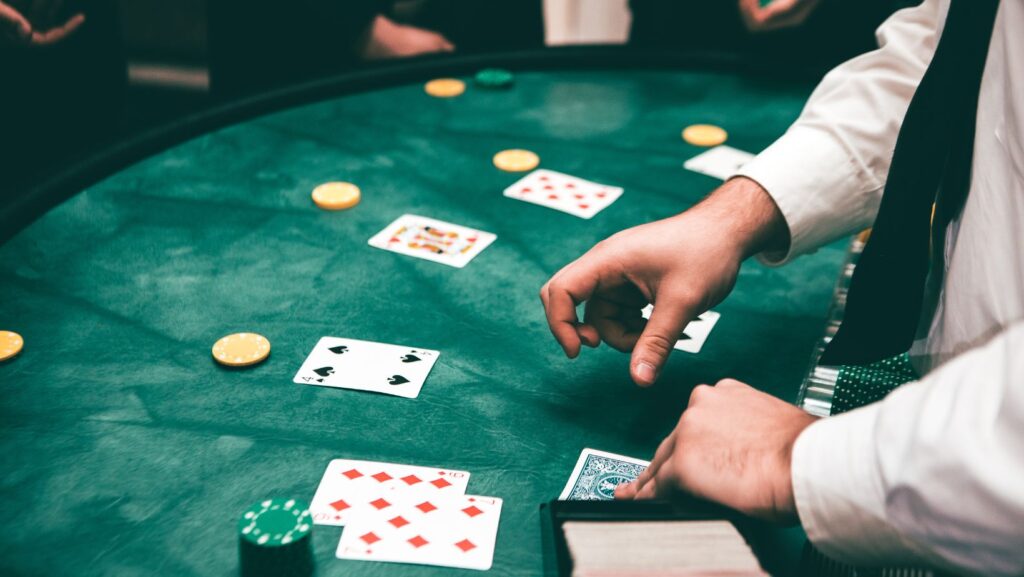
Live tables vary in tempo. Faster streams mean more decisions per hour, which quietly multiplies variance and fatigue. It’s perfectly fine to choose a slower table, ask the dealer for a moment on tricky spots, or take a short break every 15–20 minutes. Good blackjack is thoughtful blackjack.
Live-specific edges (and traps)
- Connection discipline: a stuttering stream turns good decisions into misclicks. Sit out a hand if your connection hiccups; re-enter when stable.
- Seat selection myths: you aren’t cursed by “third base.” Over thousands of hands, basic strategy dominates seat superstition.
- Studio side bets: Perfect Pairs, 21+3, multipliers—they’re fun but carry higher house edges. If you use them, keep them tiny and treat them as entertainment, not your plan.
When surrender is your best move
Late surrender (where offered) lets you forfeit half your bet in very bad spots—classic examples include 16 vs. dealer 9/10/A and 15 vs. 10 in many charts. Using surrender trims your downside tails. That’s not cowardice; that’s risk management.
A practical session routine
Think in three phases.
Warm-up (5–10 mins): Confirm rules (S17/DAS/surrender), table limits, dealer pace, and your connection. Start at minimum stakes while your eyes and hands settle.
Core play (20–40 mins): Fixed bet size, basic strategy without deviation, micro-breaks to reset your focus. If you catch yourself guessing, slow down or sit one out.
Close (5–10 mins): If you’ve reached the win goal, bank the result and leave. If you’re near the loss limit, down-shift a notch, finish a short block, and exit. The expensive sentence is “I’ll just stay a little longer.”
Common mistakes (and quick fixes)
- Chasing: upping your bet after a loss to “get even.” Fix: keep the stake constant; your edge comes from decisions, not bet size swings.
- Table hopping from tilt: swapping studios every two minutes after a bad beat. Fix: take a timed pause, not a new table.
- Side-bet creep: your “tiny” $1 side bet quietly becomes $5–$10. Fix: cap side bets to a token amount or skip them entirely.
Example, end-to-end
Session roll: $300. Table: 8 decks, S17, DAS, late surrender. Bet size: $3 (1% per hand). Win goal: +$75; loss limit: −$90.
- First 10 minutes: minimum stakes while confirming pace and stream stability.
- Core: steady $3, strict basic strategy. You face 16 vs. 10 twice: surrender once, hit once per chart—no hero plays.
- Minute 35: you’re up $54. You reduce to $2.50, play a final 15-minute block, hit +$76, and leave. The win is the exit, not the last hand.
Responsible guardrails
If you notice irritability, hiding spend, or the urge to extend after limits—stop. Use time and deposit caps in the cashier, step away for a week, and come back with smaller sizing. Live blackjack should be engaging, not stressful.
Conclusion
Winning sessions don’t come from hunches; they come from a repeatable process: pick player-friendly rules, apply basic strategy flawlessly, size your bets sanely, and exit on your signals. With that framework, the live table becomes what you want it to be—clear, deliberate, and under control—no matter how dramatic the shoe gets.