

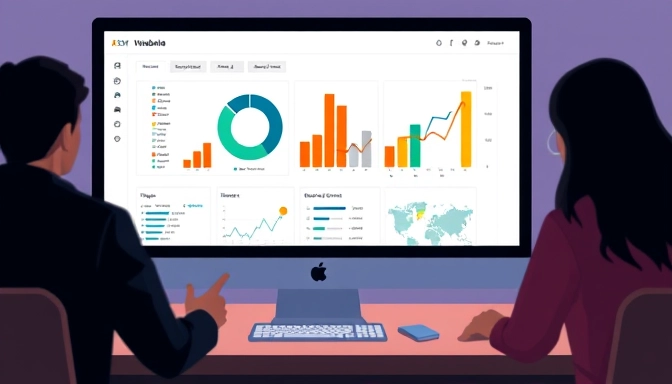
Most brands do not have a measurement problem because they lack data. They have one because the data lives in ten places. Campaign spend sits in a spreadsheet, engagement lives inside each platform, promo-code sales sit in the store backend, and the creator’s own screenshots live in a shared drive. When someone asks what a campaign actually returned, the answer takes three days to assemble and still arrives with an asterisk.
An influencer marketing dashboard exists to close that gap. Done well, it turns scattered influencer analytics into a single view that a marketer can read in thirty seconds and a finance lead will actually trust. This guide walks through what to measure, how to structure the dashboard, and the honest build-versus-buy decision most teams get wrong.
Why a dedicated influencer marketing dashboard beats another spreadsheet
Spreadsheets are where influencer campaign tracking goes to die. They are fine for one campaign with three creators. They fall apart the moment you are running rolling programs across TikTok, Instagram, and YouTube with different deliverables, rates, and reporting windows.
A purpose-built dashboard fixes three things a spreadsheet cannot. It pulls influencer marketing metrics automatically instead of relying on someone to paste them in weekly. It applies one consistent definition of a conversion across every channel, so you are not comparing a view on one platform against a click on another. And it connects spend to outcome, which is the whole point and the part manual tracking almost always skips.
The influencer marketing metrics that actually belong on it
The temptation is to show everything. Resist it. A dashboard that shows forty numbers communicates nothing. Group the influencer marketing KPIs that matter into three tiers.
Reach and awareness sits at the top of the funnel: impressions, unique reach, and follower growth attributable to the campaign. These are context, not outcomes, so keep them visually secondary.
Engagement is the middle: engagement rate, saves, shares, and comment sentiment. Engagement rate is the single most useful diagnostic here, because it tells you whether a creator’s audience is real and attentive before you scale spend with them.
Conversion and return are the tier finance cares about: attributed sales, cost per acquisition, and influencer ROI itself. This is where a real marketing attribution dashboard earns its keep, tying promo codes, tracked links, and landing-page events back to individual creators.
If you only have room for one headline number, make it ROI expressed as return per dollar spent, with cost per acquisition as the supporting metric directly beneath it.
How to measure influencer marketing ROI without fooling yourself
The formula is simple: revenue attributed to the campaign, minus campaign cost, divided by campaign cost. The difficulty is never the math. It is the attribution.
Three approaches, in rough order of reliability. Unique promo codes and creator-specific tracked links give you clean, creator-level attribution and should be the default. First-party post-purchase surveys (“how did you hear about us”) catch the influence that codes miss, since plenty of people see a creator and buy later without the code. And holdout or geo-based testing, where feasible, is the closest thing to a true read on incremental lift.
The honest caveat worth building into any dashboard: influencer marketing drives a lot of view-through and assisted conversions that last-click attribution will never credit. A dashboard that only counts direct code redemptions will systematically undervalue your creators. Show assisted conversions alongside direct ones so the number reflects reality.
Structuring the dashboard: three views, one source of truth
Build for three different readers rather than one crowded screen.
The executive view is a single screen: total spend, total attributed revenue, blended ROI, and trend over time. No creator names, no platform breakdowns. This is the view that gets screenshotted into board decks.
The campaign view breaks performance down by campaign and by platform, so a manager can see which programs are working and reallocate budget while campaigns are still live rather than after they end.
The creator view ranks individual creators by the metrics that matter to you, so renewal and rate decisions are grounded in performance instead of vibes. This is also where influencer campaign tracking becomes an ongoing asset: over time you build a ranked roster of who actually drives return.
Build versus buy: the decision most teams get wrong
There are capable off-the-shelf tools, and for many brands an influencer tracking software subscription is the right starting point. Buy when your stack is standard, your reporting needs match what the tool offers out of the box, and you would rather pay monthly than maintain anything.
Building your own influencer marketing dashboard starts to make sense when your attribution logic is genuinely specific to your business, when you need to blend influencer data with first-party sales and CRM data the off-the-shelf tools cannot see, or when you are operating at a scale where per-seat pricing stops making sense. At that point many brands work with an artificial intelligence software development company like 10Pearls to connect the data sources, apply their own attribution model, and pipe everything into a warehouse-backed dashboard they fully control.
The mistake is treating this as binary. The pragmatic path for most growing brands is to buy first to prove the workflow, learn exactly which metrics and cuts you actually use, and only then build the custom layer once you know what you are building and why. Building custom on day one, before you understand your own reporting needs, is how teams end up maintaining an expensive dashboard nobody opens.
A sensible build order
Start with the outcome layer, not the vanity layer. Wire up conversion tracking (codes and links) before you worry about pulling in impressions, because the outcome data is what makes every other number meaningful.
Then add spend, so ROI can be calculated automatically rather than reconstructed by hand. Then layer in engagement and reach for context. Then, and only then, invest in automation and a polished interface. Teams that build in the reverse order end up with a beautiful dashboard full of impressions and no answer to the one question that matters.
The takeaway
An influencer marketing dashboard is not a reporting nicety. It is the difference between renewing creators on a hunch and renewing them on evidence. Start with a tight set of influencer marketing KPIs, anchor the whole thing to a defensible way to measure influencer marketing ROI, and resist the urge to display everything. The best dashboard is the one a busy marketer trusts enough to make a budget decision from without opening anything else.