

Meta Description: This comprehensive step-by-step guide explains how to protect yourself from fraud by running a physical and digital Zilocar VIN check before purchasing a used car.
TL;DR
The asymmetric used car market often conceals critical automotive historical defects from prospective buyers. A vehicle appearance can easily mask severe hidden liabilities like odometer fraud or title manipulation. In this guide, you will learn how to execute a systematic verification process to protect your financial investment. Running a Vehicle Identification Number (VIN) check pulls back the curtain on regional legislative registries, insurance records, and outstanding manufacturer safety recalls.
What Is a VIN Check Before Buying a Used Car?
A VIN Check is a comprehensive digital and physical background investigation that tracks a vehicle’s entire historical footprint using its unique 17-character alphanumeric code. Utilizing neutral platforms like Zilocar to run a VIN check before buying a used car compiles insurance data, law enforcement logs, and registry entries into a definitive transparency report.
The Digital Fingerprint of a Vehicle
Every modern vehicle carries a unique 17-character Vehicle Identification Number assigned during manufacturing. This string of characters acts as a definitive biological signature that remains tied to the chassis permanently. It tracks the asset through assembly plants, shipping loops, regional registration systems, and dealership networks.
Administrative registries across the globe record official transactions using this specific character sequence. Insurance companies, law enforcement bodies, and maintenance centers route all documented events back to this central identity file. Consequently, the identifier serves as the foundational anchor for all historical tracking.
Cross-Referencing Physical and Documented Data
The primary purpose of running this check is to establish absolute alignment between physical hardware and official database records. Fraudulent sellers frequently alter odometers or falsify ownership papers to inflate a vehicle’s residual value. A background investigation exposes these discrepancies by displaying the true timeline of recorded data points.
Uncovering hidden liabilities early protects secondary market buyers from severe legal and financial consequences. The report details factory specifications, previous ownership changes, and structural damage history. This data gives consumers the empirical evidence needed to validate a seller’s claims or walk away from a problematic transaction.
The Anatomy of a VIN: What Do the 17 Characters Mean?
Modern VINs follow strict ISO standards to encode manufacturing details directly into a 17-character alphanumeric string. By breaking the code into three distinct structural sections—the manufacturer identifier, the vehicle descriptor, and the indicator section—buyers can instantly verify if a vehicle’s physical factory specs match its paperwork.
The Standardized Format (ISO 3779 / 3780)
Modern vehicular industries universally conform to international standards to enforce a uniform alphanumeric structure. This sequence explicitly omits the letters I, O, and Q. This deliberate exclusion systematically prevents scanning or transcription errors with the numerical digits 1 and 0.
The omission of these characters keeps data entry clean across global automotive networks. It eliminates visual confusion during manual inspections or digital optical character recognition scans. Any code containing these forbidden letters is an immediate indicator of a counterfeit or altered plate.
The World Manufacturer Identifier (WMI)
The opening cluster consisting of characters 1 through 3 designates the geographic origin of production. This segment pinpoints the exact country of manufacture and the specific corporate division responsible for assembly. For example, specific leading integers isolate North American build sequences from European or Asian production facilities.
A change in regional manufacturing locations drastically alters these first three symbols. Buyers can easily cross-reference these characters with factory build sheets to confirm asset legitimacy. A mismatch here reveals that a vehicle is not what the seller claims it to be.
The Vehicle Descriptor Section (VDS)
Characters 4 through 9 map out the complex architectural blueprints of the machine. This segment details precise body style variations, specific engine displacement characteristics, integrated restraint safety configurations, and vehicular platform lines. Specialized decoding software translates these characters to reveal the exact original factory package.
Position 9 serves exclusively as a mathematical check digit. Systemic validation scripts use a calculated algebraic key to process the surrounding characters. This algorithmic check instantly flags synthetic or manually altered sequences that do not follow factory mathematical laws.
The Vehicle Indicator Section (VIS)
Characters 10 through 17 specify localized assembly nuances and individual production details. Position 10 globally isolates the standardized model year code, which allows buyers to verify the true chronological age of the chassis. Position 11 indicates the physical assembly plant location where the components were joined.
Characters 12 through 17 represent the sequential production line number unique to that specific chassis. This final numerical sequence distinguishes the vehicle from every other unit of the same model. It functions as the ultimate identifier within regional administrative archives.
Where Is the VIN Located on a Used Car?
A vehicle’s VIN is permanently hardcoded onto multiple physical structures and legal documents to prevent tampering. Finding and cross-referencing these locations ensures the car’s identity remains consistent across its dashboard, door jambs, metal engine components, and official registration paperwork.
Primary Visible Placement (Dashboard Plaque)
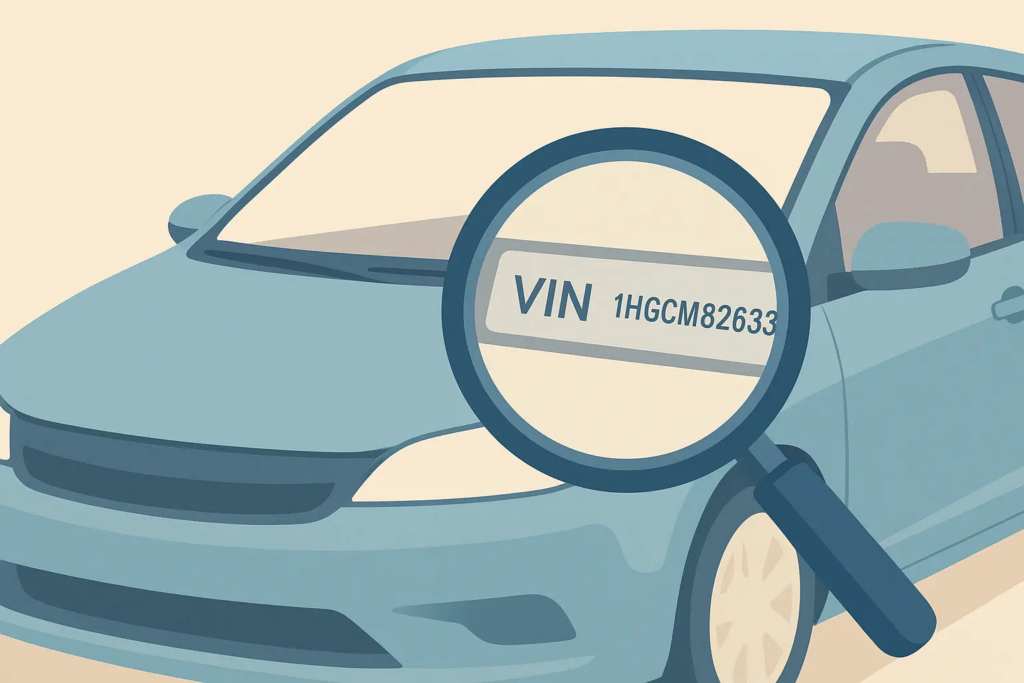
The primary physical point of validation resides on the lower driver-side section of the dashboard. Mechanics position this plaque flat to face outward through the bottom edge of the front windshield glass. This placement allows clean line-of-sight scanning from outside the vehicle without requiring key access.
The text on this plate must be perfectly legible and free of physical distortion. It must remain firmly attached to its structural mounting area. Any signs of loose alignment or adhesive residue around this plate suggest unauthorized human intervention.
Secondary Structural Points (B-Pillar Jamb)
Opening the driver’s side front entry door reveals a critical secondary safety compliance label. This metal plaque or high-durability sticker adheres permanently to the B-pillar frame jamb directly adjacent to the door latch mechanism. It contains detailed weight ratings alongside the master identification string.
This label uses specialized factory printing techniques that resist standard wear and moisture. Tampering attempts cause the material to wrinkle, tear, or show hidden patterns. Buyers must inspect this area to confirm the factory tracking data remains pristine.
Under-the-Hood Metal Stampings
Heavy mechanical stampings drive the alphanumeric characters directly into the core metallic sections of the vehicle chassis. These marks are regularly found on the forward bulkhead firewall, inner fender wheel aprons, or directly on the engine block cylinder casing. Exact locations vary depending on regional factory specifications and vehicle class.
These deep metallic indentations are incredibly difficult for criminals to alter convincingly. Grinding or welding over these areas leaves distinct texturing clues and changes the metal thickness. Verifying these stampings provides absolute proof of the physical identity of the frame.
Administrative Document Alignment
Every physical location on the vehicle must display absolute alphanumeric alignment with off-car administrative documents. Prospective buyers must match the vehicle’s title deed, active registration papers, and insurance policies character for character. Regional emissions or inspection certificates must also display the identical sequence.
A single character discrepancy across these documents nullifies the legality of a transaction. Mismatches create massive roadblocks during regional title transfers and insurance registration loops. Strict alignment ensures the asset has a clean, traceable administrative history.
Step-by-Step Guide: How to Perform a VIN Check
Running a complete VIN check requires a structured approach that blends digital database lookups with rigorous physical field inspections. Following this logical sequence allows buyers to gather the 17-character string remotely, pull centralized records, and physically verify that the asset matches its documented history.
Step Remotely Requesting the Code
Buyers should request the full 17-character string from the seller prior to traveling for a physical inspection. Reputable private sellers and commercial dealerships routinely provide this data to demonstrate professional transparency. Outright hesitation, defensive behavior, or systematic refusal serves as an immediate warning sign of potential fraud.
Obtaining the code remotely saves valuable time and travel resources. It allows consumers to filter out problematic options before committing to an on-site visit. This initial digital screening forms the first line of defense against deceptive marketplace listings.
Step Navigating Regional and Global Database Ecosystems
North American history operations scale heavily across unified clearinghouses like CARFAX and AutoCheck, which integrate insurance totals and DMV logs. Free public validations for theft alerts and outstanding safety defects remain accessible through the National Highway Traffic Safety Administration (NHTSA) portal. These networks provide a rapid benchmark against massive domestic datasets.
Cross-border vehicle flows across European sovereign borders introduce high risks of data fragmentation. Decentralized private platforms like carVertical and AutoDNA specialize in aggregating international telemetry information, localized repair estimates, and salvage records. United Kingdom protocols require matching the Vehicle Registration Mark (VRM) with the official V5C logbook document using the central GOV.UK Vehicle Check interface.
Step Executing the On-Site Physical Match
The final step requires a physical audit of the physical asset in a well-lit environment. Buyers must locate and view every stamped character sequence across the dashboard, door jamb, and engine bay. Each character must match perfectly across all physical surfaces and official title papers.
Using a smartphone camera simplifies this verification process by allowing clear macro photography of hard-to-reach stampings. Zooming in on the photos helps expose micro-defects or alignment anomalies that escape the naked eye. This physical verification bridges the gap between digital data records and mechanical reality.
What Are the Main Warning Signs to Look Out For on a Vehicle History Report?
History reports expose critical text-based red flags that indicate a used car carries hidden mechanical, financial, or legal liabilities. Spotting non-linear mileage trends, permanent title brand stamps, rapid ownership transfers, or spec discrepancies allows buyers to walk away from high-risk assets before signing a contract.
Odometer Rollback Deviations
Data reports present a linear, sequential mileage history anchored to official service events or registration renewals. Non-linear, decreasing mileage entries indicate intentional digital or mechanical instrument cluster tampering. Unscrupulous entities execute these rollbacks to artfully inflate the vehicle’s resale valuation.
A vehicle showing 50,000 miles in 2024 but only 40,000 miles in 2025 is a definitive fraud alert. This discrepancy indicates that the actual wear on the engine components exceeds the visible odometer readout. Cars with compromised mileage history carry immense mechanical risk and should be rejected immediately.
Title Brands and Total Loss Status
Severe insurance write-offs trigger systemic title brands that permanently attach to the vehicle’s historical identity file. These include “Salvage” labels indicating reconstruction costs surpassed total asset value, and “Rebuilt” designations tracking post-catastrophe reconstruction. Specialized “Flood” or “Water Damage” indicators track pervasive electrical corrosion vectors that ruin wiring harnesses over time.
These brands permanently reduce the residual value of the asset and compromise structural integrity. Many traditional insurance corporations refuse to issue comprehensive policies for branded titles. Driving a rebuilt total-loss vehicle without expert structural verification presents severe safety hazards.
Active Liens and Encumbrances
Vehicles harboring unresolved financial loans or serving as active collateral create immense ownership transfer liabilities. Unpaid asset encumbrances authorize banking entities to legally repossess the car from a subsequent secondary market purchaser without prior notice. The buyer loses both the physical transportation and their hard-earned monetary investment.
Centralized history reports disclose outstanding financial obligations tied directly to the chassis code. Buyers must demand proof of lien clearance from the lending institution before finalizing any payment. Clean title deeds must be completely free of legal holds to ensure safe ownership transfer.
Title Washing Tactics
Deceptive operators frequently use title washing to clear permanent administrative warnings from a vehicle’s record. This practice involves repeatedly transferring a vehicle across multiple geographic states or countries with differing registration laws. The process exploits gaps in regional database communication to generate a clean title document.
Frequent registrations within short intervals signal an intentional attempt to mask historical structural accidents. Savvy buyers catch this pattern by reviewing the chronological sequence of regional transfers on the history report. Tracking these geographical leaps exposes the hidden background of the vehicle.

https://img.freepik.com/free-photo/close-up-car-dealership_23-2148130084.jpg?semt=ais_hybrid&w=740&q=80
How Can You Detect Physical VIN Tampering and Vehicle Cloning?
Vehicle cloning involves placing authentic VIN tags from a clean car onto a stolen or severely damaged chassis. Detecting this sophisticated fraud requires looking for physical clues like non-factory rivets, scratched metal plates, and mismatched alphanumeric fonts across the vehicle’s structural stamping points.
Visual Irregularities on the Dashboard Plaque
Legitimate factory identification plaques exhibit flawless alignment, uniform spacing, and perfectly consistent font styles. Fraudulent operators often struggle to replicate these exact manufacturing tolerances during manual alterations. Scratches, distorted edges, uneven character depth, or crooked lines indicate physical tampering.
Any visual indication of a plate being pried loose warrants immediate cancellation of the sale. Criminals use aftermarket components to mimic genuine factory stampings, but they rarely match the precision stamping machinery of major automakers. Close physical observation exposes these minor visual anomalies.
Inspecting Fasteners and Adhesives
Automakers secure dashboard identification plates using specialized, proprietary rivets that feature unique structural shapes. These fasteners are incredibly difficult for criminal entities to source, replicate, or install without specialized industrial tooling. The use of standard hardware store rivets, hex screws, or visible epoxy glue indicates illicit replacement.
Inspecting the backside of the mounting area where possible reveals whether the original attachments were drilled out. Loose plates that rattle when touched indicate a failure to replicate factory mounting rigidity. True factory plates remain perfectly immobile for the entire operational lifespan of the chassis.
Analyzing Identity Label Integrity
The B-pillar certification sticker must remain perfectly flat, smooth, and free of peeling edges. Specialized security printing layers ensure that any attempt to peel off the sticker causes irreversible structural tearing. Wrinkled surfaces, missing corners, or air bubbles underneath indicate manual transferring from a donor car.
Mismatched trim levels or color descriptions on the label further confirm identity theft. A blue sedan carrying a certification label that describes a red SUV indicates a crude cloning attempt. Cross-referencing these physical attributes against the digital build sheet exposes identity fraud.
What Steps Should You Take if Your Check Reveals an Open Safety Recall?
Discovering an unaddressed factory safety recall during a VIN check requires careful evaluation of the vehicle’s structural risks. Buyers must assess the severity of the defect, contact an authorized manufacturer dealership to confirm parts availability, and coordinate repairs with the seller before final ownership transfer.
Assessing the Severity of the Defect
Open recalls indicate critical safety flaws or manufacturing errors officially identified by the automaker or federal regulatory bodies. Buyers must determine the precise nature of the defect by reviewing the official recall advisory code. Particular attention must be paid to faults involving core safety components like airbags, braking systems, or fuel lines.
Some defects carry severe fire or structural failure risks that make the vehicle unsafe to drive. Other recalls involve minor software updates or non-critical interior trim adjustments. Discerning between dangerous mechanical failures and simple service notices determines your immediate purchasing strategy.
Leveraging Dealership Obligations
Authorized manufacturer dealership service departments are legally mandated to perform official recall repairs free of charge. Providing the 17-character sequence to a local service adviser confirms whether the vehicle remains eligible for the complimentary fix. It also reveals whether the necessary replacement components are currently in stock or backordered.
Severe parts backlogs can delay critical repairs for several weeks or months. This wait time leaves the buyer holding an unusable or hazardous asset after the purchase. Gathering parts availability data directly from the dealership avoids unexpected storage or rental car expenses.
Negotiating Pre-Purchase Resolution
Buyers should coordinate with the seller to have all outstanding safety recall work completed before final payment occurs. Legitimate sellers will handle the vehicle transport and dealership scheduling to secure a successful transaction. This arrangement ensures the car meets basic roadworthiness and safety standards before you take physical possession.
If the seller refuses to resolve the recall, the buyer can use the required repair timeline as leverage. The estimated inconvenience and safety risks should drive a corresponding reduction in the final purchasing price. This proactive approach keeps safety at the forefront of the transaction.
FAQ
Can you ask a seller for a VIN before buying a used car?
Yes, requesting the code prior to an on-site visit is standard safety protocol in secondary market transactions. Reputable sellers provide this string immediately to demonstrate transparency.
Where is the VIN located on a used car?
The most common visible locations include the lower driver-side dashboard corner and the structural B-pillar door jamb frame. Heavy stampings also exist inside the engine bay on the forward firewall bulkhead panel.
What are the main warning signs to look out for on a vehicle history report?
Buyers must monitor reports for non-linear mileage trends that indicate odometer rollback manipulation. Permanent title brands like Salvage or Flood damage also constitute critical warning signs.
How can you detect physical VIN tampering or vehicle cloning?
Inspect the identification plates for scratched surfaces, mismatched alphanumeric fonts, or non-factory hardware store rivets. Security compliance labels must remain flat without signs of peeling or air bubbles.
What steps should you take if a VIN check reveals an open safety recall?
Contact an authorized manufacturer dealership to verify the availability of replacement components and confirm eligibility for a free repair. Coordinate with the seller to ensure completion of the safety service before final title transfer.