

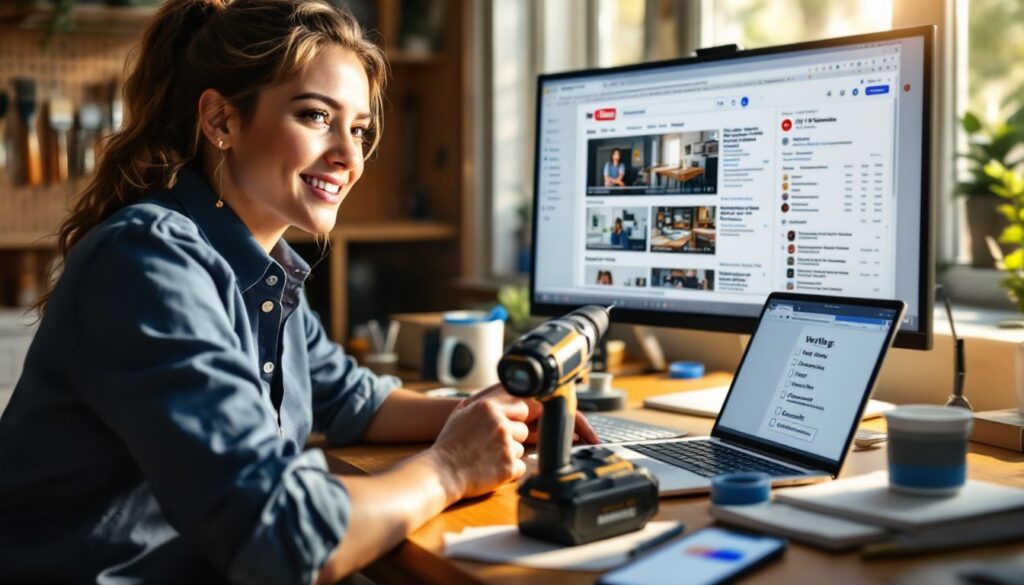
This guide is for homeowners, DIY sellers, and small brands that need a repeatable way to discover and hire YouTube micro-influencers who drive traffic and purchases. It focuses on creators with 10K to 100K subscribers who make project videos, tool reviews, and step-by-step tutorials. Readers will get exact search workflows, vetting checks to avoid wasted spend, and outreach tactics that convert viewers into buyers. No fluff. Just the steps a founder or marketing operator can run today and measure with tracked links and offer codes.
Key Takeaways
- Finding micro influencers on YouTube involves targeting creators with 10K to 100K subscribers who produce hands-on DIY, renovation, and tool review content.
- Use specific search keywords, YouTube filters, and manual vetting techniques to identify YouTube micro influencers whose audiences match your buyer profile.
- Leverage third-party tools and marketplaces like Influencer Hero, Modash, and AspireIQ to scale discovery of niche, engaged micro influencers efficiently.
- Set clear success metrics such as tracked sales, click-through rates, and watch-through rates to measure campaign effectiveness with micro influencers.
- Start with small, measurable tests by sending product samples and tracking conversions to build lasting relationships with reliable micro influencers.
- Focus on creators with consistent engagement and conversion performance to maximize ROI rather than chasing large but less targeted audiences.
Why Micro-Influencers Work For Home, Renovation, And DIY Niches
Micro-influencers are often the best channel for home and DIY brands because their audiences are targeted, engaged, and action-oriented. Creators in the 10K to 100K subscriber range typically post hands-on content like room makeovers, tool demos, and build-along tutorials. Those viewers subscribe because they want repeatable, useful information. That equals higher trust and a clearer path to conversion than one-off viral videos.
Practical benefits include: higher comments-to-views ratio, niche expertise, and lower cost per conversion. Expect an engagement rate of 2 to 5 percent for micro creators in this niche. That is a useful benchmark: if a creator with 25K subscribers gets 2,000 views and 80 engagements, the channel is performing normally. Bigger creators may reach more people but often have lower engagement and higher CPMs, which can hurt ROI for $50 to $200 product items.
Micro creators also produce content that maps closely to purchase intent. A tool review or “how I replaced my vanity” video naturally prompts viewers to buy supplies. For those who want a quick primer on channel-focused tactics beyond YouTube, a short reference on how to find youtube influencers for your business shows business-minded approaches to discovery. For platform-agnostic ideas about working with smaller creators, a practical list of influencer platforms for micro influencers helps decide whether to use a marketplace or do outreach directly.
Define Your Ideal Micro-Influencer: Audience, Niche, And Success Metrics
Start by writing one-page ideal-creator profiles. Don’t guess. Specify audience demographics, content themes, and measurable KPIs.
Use these fields in your brief: subscriber range (10K to 100K), typical views per video (1K plus), primary content types (before-and-after, tool review, tutorial), and audience location (for example US homeowners aged 25 to 45). Targeting creators whose viewers match buyer profiles reduces wasted impressions.
Set clear success metrics for the test partnership. Use a mix of attention and conversion metrics. Example KPIs for a product send: unique tracked sales via a code, click-through rate on the pinned link, and average watch-through rate above the channel median. Expect micro-influencers to produce more consistent micro-conversions than macro creators.
When comparing discovery approaches, it helps to read a tactical primer on how to find youtube influencers for additional manual and automated options. If the team also runs campaigns on other channels, review methodologies for how to find micro influencers on facebook to adapt cross-platform learnings.
Search Strategies To Discover Relevant Micro-Influencers
Below are two complementary workflows. Use the manual YouTube approach to validate quality. Use third-party tools to scale and filter faster.
Using YouTube Search, Filters, And Channel Pages To Find Creators
- Start with intent keywords. Search phrases like “bathroom tile tutorial”, “kitchen cabinet install”, or “best cordless drill 2026”. Include the word “DIY” and room names. Add year for fresher content.
- Use the Filters menu. Filter by Upload Date to find creators who post recently. Sort by View Count to surface proven topics. Watch the top 5 videos for audience cues.
- Inspect channel pages. Check subscriber count, frequency of uploads, and recent view averages. Look at comments for buyer intent language like “where did you get that tile” or “how much did it cost”. Those are signals the audience is product-curious.
- Use hashtags inside video descriptions such as #HomeRenovation or #DIYTutorials. Many creators tag projects. Search those tags to gather a list.
Manually collecting 30 to 50 candidate channels gives a realistic pool to vet. After manual validation, load top candidates into a spreadsheet and record subscriber count, average views, recent video topics, and contact method.
For added context on discovery fundamentals and outreach mechanics, consult a step-focused piece on how to find influencers on youtube that outlines search and outreach flow.
Using Third-Party Tools, Creator Marketplaces, And Social Listening
Scaling discovery requires filters that YouTube search lacks. Use marketplaces and tools to find creators by niche, geography, and engagement.
Tools to try: Influencer Hero, Modash, and AspireIQ. These let teams filter for subscribers between 10K and 100K, location, and keywords like “home decor” or “renovation”. Use filters to exclude entertainment-only creators who do a one-off DIY video. When you find a strong match, verify with manual checks described earlier.
Use social listening to spot creators collaborating with competitors. Search competitor product names in YouTube and Google. A creator who already covered a similar product likely has a receptive audience. For lists of smaller creator channels, a curated article about how to find the best influencers offers methods for identifying creators who consistently deliver results.
Marketplaces simplify contracting and payment. If the brand prefers DIY outreach, use a combination of tool exports plus direct email or channel business inquiries. For brands that want a plug-and-play option, review marketplace choices in the context of youtube influencer marketing to weigh tradeoffs between control and convenience.
A final tool note. If the initial budget is small, prioritize lists from free searches and one paid export from a tool. That saves time while limiting subscription spend. If a candidate list converts in early tests, scale up tool usage for efficient outreach.
Conclusion: Build Relationships, Test Partnerships, And Scale What Works
Start with small, measurable tests. Send product samples, offer short paid reviews, and track sales with unique codes or UTMs. Measure both immediate conversions and longer-term lift in traffic to product pages. Double down on creators who deliver cost per sale below your target. Over time, formalize repeat deals with top performers and consider affiliate splits for long-tail content. Prioritize creators who repeatedly drive measurable buys rather than chasing single viral hits.