

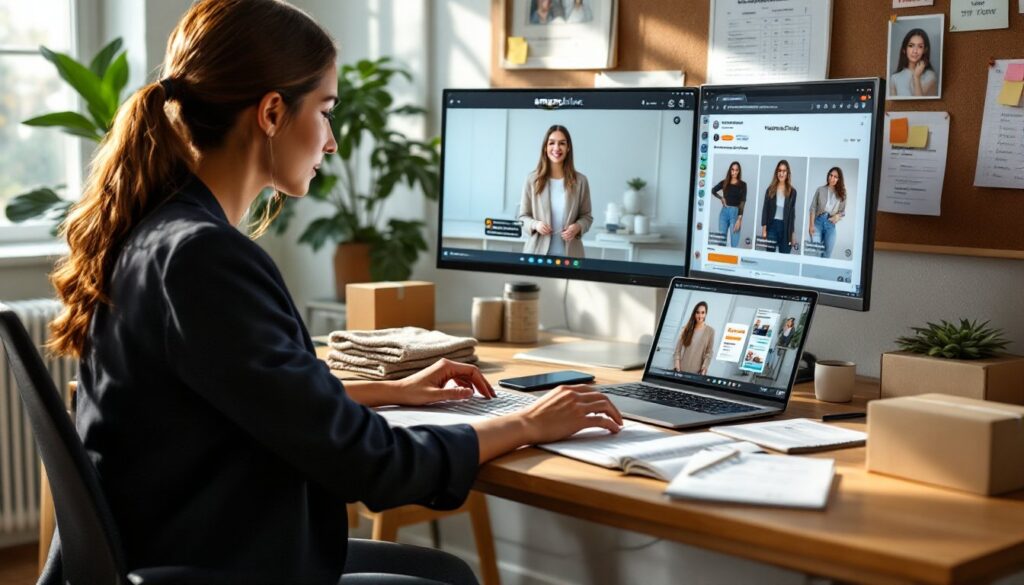
This is a hands on playbook for founders, ecommerce operators, and small agencies who need to go from zero to a converting Amazon fashion partnership quickly. It focuses on discovery workflows, scrappy tools, vetting checks that catch fake reach, and outreach scripts that get replies. Expect tactical steps for Amazon Live, storefront creators, Instagram and TikTok creators who drive Amazon purchases, plus the metrics and benchmarks needed to pick winners and avoid wasting spend.
Key Takeaways
- Amazon fashion influencers are ideal for conversion-focused campaigns due to their lower funnel intent and direct purchase paths on platforms like Amazon Live and storefronts.
- Effective discovery of Amazon fashion influencers involves on-platform searches on Amazon Live and storefronts, hashtag scanning on Instagram and TikTok, and tool-assisted approaches with affiliate networks.
- Thorough vetting is essential, including checking audience engagement quality, authenticity to avoid fake followers, and verifying Amazon-specific credibility such as storefronts and affiliate links.
- Outreach should be concise and clear, offering product trials, defined deliverables, and performance bonuses to incentivize measurable sales outcomes.
- Start campaigns with a mix of a micro creator using product-only compensation plus affiliate links and a mid-tier paid creator with performance bonuses to optimize learning and ROI.
- Benchmark engagement rates at 2-5% for micro-influencers and expect 0.5-2% conversion on relevant placements to identify the most effective Amazon fashion influencers.
Why Amazon Fashion Influencers Matter (And What To Expect From This Channel)
Amazon fashion influencers combine product curation with direct purchase paths. That makes them useful for conversion oriented goals like driving catalog sales and improving product page velocity. What to expect:
- Lower funnel intent. Many viewers are actively shopping, especially on Amazon Live and influencer storefronts. Expect higher conversion rates than general brand awareness placements.
- Mixed audience quality. Some creators have loyal shoppers: others inflate reach with low quality followers. Vetting is mandatory.
- Performance variety by format. Short video and Live can spike sales fast. Evergreen YouTube try-on videos provide steady long tail revenue. Understand the tradeoffs: micro creators often convert better per follower but have smaller scale. Macro creators offer scale but need stronger creative and stricter KPIs.
Benchmarks to use:
- Engagement: 2 to 5 percent is typical for micro-influencers. Anything under 1 percent needs a deeper look.
- Conversion: Track affiliate sales, storefront clicks, and promo-code redemptions. A first-test expectation is 0.5 to 2 percent conversion on a highly relevant placement.
Know where to prioritize. If the product is fashionable, size- or fit-sensitive, focus on try-on content creators who show fit, fabric, and movement. If the goal is quick sell-through, lean into Amazon Live and creators who present multiple SKUs in one session.
Proven Places To Discover Amazon Fashion Influencers Quickly
Fastest way to find relevant creators is a combined on-platform and off-platform search. Use these exact workflows to surface active Amazon fashion influencers.
- Amazon Live and storefronts
- Browse Amazon Live under categories like Fashion and Beauty and watch recent streams for host style, pacing, and current products. Use catalog timestamps to see what sold during a stream. For targeting Live specialists, follow step guides such as how to find amazon live influencers.
- #FoundItOnAmazon and hashtag scanning
- Search Instagram and TikTok for #AmazonFinds, #AmazonFashion, and niche tags like #AmazonOutfit or #AmazonTryOn. Sort by most recent and highest engagement posts to find creators who are actively driving Amazon traffic.
- Creator storefront and affiliate mentions
- Look at product reviews and Q and A comments on Amazon product pages. Creators who leave detailed reviews often link to their storefront in their bios. Use Google queries like “influencer name + Amazon storefront” to locate them quickly. This mirrors the tactics in general guides on how to find amazon influencers.
- Tool-assisted discovery
- Use platforms focused on Amazon creators and affiliate networks when scaling. Paid marketplaces surface creators already tagging Amazon products which speeds outreach for targeted campaigns. For research on pricing dynamics consult resources about average amazon influencer rates.
How To Vet Influencers For Fit, Authenticity, And Performance
Vetting is non negotiable. Follow a checklist that separates useful creators from risky partners.
Step 1. Audience match and content fit
- Verify audience intent by watching 3 to 5 recent videos or Lives. Do viewers ask fit questions, sizing, or purchase follow ups? If yes, the audience is shopping oriented.
Step 2. Engagement quality checks
- Look at comment substance. Are comments generic single words or do they mention fit, size, or where to buy? Prioritize creators whose comments demonstrate purchase intent.
Step 3. Fake follower and engagement checks
- Use manual signals plus simple tools. Spot sudden follower spikes, repeated commenter names, or a high follower to view ratio. For a deeper approach use vetted tools referenced in materials on how to find micro influencers for your brand.
Step 4. Amazon specific credibility
- Check whether the creator runs an Amazon storefront, has affiliate links, or leaves detailed Amazon product reviews. Those behaviors correlate with higher conversion rates.
Step 5. Performance expectations and rate sanity check
- Ask for last 3 campaign examples and concrete KPIs: clicks, affiliate sales, unit sales, and view-to-click ratios. Compare their ask to industry pricing and the rules from pages about average amazon influencer rates. If they can not share any conversion data, treat the first deal as a low risk test with product or a small paid post.
Outreach, Negotiation, And Campaign Setup: Templates And Best Practices
Outreach must be concise, measurable, and low friction. Use direct messages for social platforms and email when available. Below are steps that close deals faster.
- Short outreach template
- Subject line: Collaboration on Amazon try on
- Message: Two sentences on who the brand is, one sentence on the product fit for their audience, one sentence offer (paid amount or product value), and one clear CTA like “Are you available for a 30 minute brief this week?”
- What to include in initial offer
- Always offer: product to try, a clear deliverable list (number of posts, length, Live time), and a performance bonus for agreed sales threshold. For reference on negotiating influencer fees use insights from guides about how to find the best influencers.
- Contract must haves
- Deliverables and timeline.
- Tracking method: affiliate links, storefront link, or unique promo code.
- Usage rights and attribution.
- Payment terms and performance bonus structure.
- Campaign setup checklist
- Provide product detail sheet with sizes, fabric, and key selling points.
- Provide clear UTM links and a dashboard or spreadsheet to capture sales.
- Agree on sample approval window and creative guardrails.
- Low budget / scrappy options
- Offer product-only for micro creators with the option for a small affiliate split. Use templates proven in adjacent categories such as how to find beauty influencers. This reduces upfront cost and ties payout to performance.
Conclusion
Finding Amazon fashion influencers is about repeatable workflows. Use Amazon Live and storefront scanning to find active sellers, validate audience quality with engagement and product review checks, and structure deals that tie payment to measurable sales. Start with a two creator test: one micro creator on product-only plus affiliate, and one mid tier paid creator with a performance bonus. That combination gives quick learnings without overspending.