

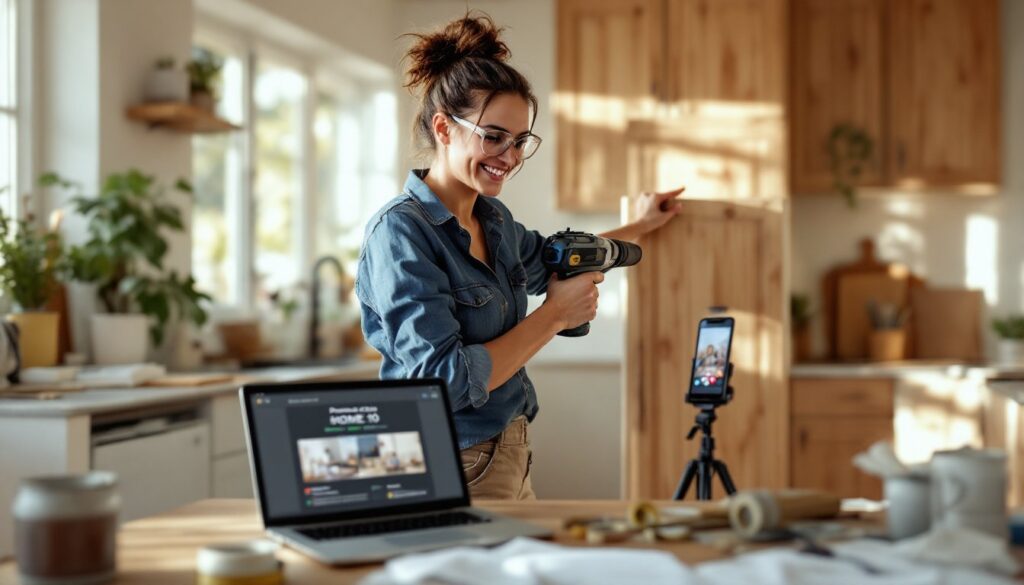
This is a tactical playbook for homeowners, renters, and DIY creators who want to earn from TikTok without wasting time or money. It explains exactly how brand deals work on TikTok, who qualifies in the home and renovation niche, how to find and pitch partners, and how to measure real ROI. The advice is hands-on: manual workflows, templates, negotiation points, and metrics to track. Readers will walk away able to pursue their first paid TikTok collaboration or improve the returns on existing partnerships.
Key Takeaways
- TikTok brand deals offer DIY creators in the home renovation niche lucrative opportunities by showcasing real projects and demonstrating products through engaging, short-form videos.
- Micro creators with 10k to 50k followers can earn $200 to $700 per sponsored TikTok, emphasizing the importance of engagement and niche fit over follower count when securing brand deals on TikTok.
- Effective pitches highlight relevant video performance metrics, propose clear deliverables like 30-second tool demos, and include predictable budgets and outcomes to attract home improvement brands.
- Consistent content formats such as quick tutorials, before-and-after reveals, and tool demonstrations maximize conversion by providing clarity, proof, and calls to action with promo codes.
- Creators should negotiate clear terms including usage rights, fair compensation, and legal disclosures such as FTC compliance to protect their interests and build professional relationships.
- Measuring ROI involves tracking promo code usage, engagement, and verified views to demonstrate value and foster long-term TikTok brand deal partnerships.
What Are TikTok Brand Deals And Why They Matter For DIY Creators
TikTok brand deals are paid collaborations where a creator produces short-form videos promoting a product or service. For DIY and home renovation creators the format maps naturally to how-to clips, before-and-after reveals, tool demonstrations, and room makeovers. These deals matter because they convert better than pure awareness ads when the creator demonstrates a product in a real project.
Key realities to accept: micro creators (10k to 50k followers) usually earn between $200 and $700 per sponsored TikTok in the home niche, while higher-reach creators command more. Engagement and niche fit matter more than follower counts. Brands that sell tools, paint, hardware, decor, and smart home gear prefer creators who show projects from start to finish and can produce product-driven results.
What success looks like for a DIY creator: reproducible conversions. Brands care about clicks, sales, and measurable lifts. A single 30 to 60 second TikTok that shows a tool in use plus a clear promo code can drive direct purchases and long-term partnership opportunities.
Who Qualifies: Audience, Content, And Niche Fit For Home Renovation Creators
Qualification is about three things: audience, content, and niche fit.
- Audience. Brands want an audience that looks like buyers. Priority metrics: views per video, engagement rate, and demographics. A creator with 20k followers and 10k average views with a 6 to 12 percent engagement rate is attractive for home brands.
- Content. The best formats are quick tutorials, tool demos, and before/after sequences. Frequent formats that convert: step-by-step repairs, product swaps, and time-lapse renovations. Consistency in posting and a portfolio of project-based videos beat a single viral clip.
- Niche fit. Use niche signals such as hashtags (#DIY, #HomeImprovement, #Renovation), recurring video themes, and the types of products shown. Creators who consistently include tools, fasteners, or decor in context prove relevance.
Practical qualification checklist:
- Average views for last 10 videos. Prefer creators whose average views are at least 20 to 30 percent of their follower count.
- Engagement rate. Micro-influencer baseline: 2 to 5 percent is typical, 5 to 12 percent is strong for DIY content.
- Recent demos or project videos featuring tools or materials.
For extra credibility, creators can point brands to case studies or to a guide on how to get brand deals on TikTok when explaining experience and process in pitches.
How To Find And Pitch Brand Deals
This section focuses on two workflows: manual discovery and platform-assisted outreach.
Manual discovery, step-by-step:
- Search TikTok for project hashtags and filter by recent, not just viral content. Use searches on hashtags like #DIYProject, #ToolReview, and #RoomMakeover.
- Browse Creator Marketplace and brand profiles for recent collaborations: note the creators brands are already using.
- Use YouTube and Instagram cross-checks to verify creators produce longer-form tutorials, which improves conversion.
- Save 20 candidates in a spreadsheet with follower count, average views, niche tags, and contact method.
Platform-assisted discovery:
- Use creator marketplaces and outreach platforms to speed up matching. Paid services can filter by audience demographics and engagement.
- When budget is tiny, search TikTok and use direct messages or contact email in profile. When scaling, use platforms to manage contracts and payments.
Pitching fundamentals:
- Keep initial outreach short and focused on outcomes for the brand. Reference a relevant past video and propose one clear deliverable. Offer clear metrics and a budget range.
- Upsell by proposing a series or cross-posting to Instagram Reels if the creator can deliver verified reach.
Include a concise link to resources that explain how to get brand deals on TikTok to demonstrate knowledge and process.
Pitch Template And Key Metrics To Include
Pitch Template (use in email or DM):
- One-line intro: who they are and niche, for example, 20k DIY followers focused on small renovations.
- Proof point: include the best recent video stat, e.g., 45k views, 3.8 percent engagement, and a screenshot link.
- Proposed deliverable: 30 second product demo showing the tool in a project: include timeline and number of edits.
- Ask: state a rate range or ask for product plus fee: offer a performance bonus tied to sales or promo code redemptions.
- CTA: invite a quick 15 minute call.
Key metrics brands expect:
- Average views per video.
- Engagement rate (likes + comments + shares divided by views or followers).
- Audience geography and age breakdown if known.
- Past conversions: promo code redemptions or tracked affiliate sales.
Creators who include a link to content creator brand deals or who can show how they helped other brands will get faster responses.
Creating Short-Form Content That Converts For Home, Renovation, And DIY Topics
What converts: clarity, proof, and a tight hook. The structure that works:
- Hook in the first 1 to 3 seconds: a clear problem statement or big result.
- Short demo or proof of use: show the tool in action, not just an unboxing.
- Call to action: show the result and a promo code or URL.
Formats that consistently drive clicks and purchases:
- Before and after transformations with timestamps.
- Tool comparison tests with side-by-side outcomes.
- Fast tutorials labeled with outcome, for example, “Fix a squeaky stair in 60 seconds.”
Optimization tips:
- Use relevant trending sounds sparingly: prioritize clarity over trendiness for conversion-driven content.
- Add captions and product text overlays for viewers who watch without sound.
- Pin a comment or include a short promo code in video text so viewers can act immediately.
When promoting physical products, creators should link to a page about brand deals for influencers if a brand asks for case studies or previous collaborations.
Negotiating Terms, Compensation, And Usage Rights (What To Ask For)
Negotiation basics for DIY creators: start with a clear menu of deliverables and price add-ons.
Common deliverables and ballpark values:
- Single TikTok video: micro creators typically ask $200 to $700.
- Bundled package: TikTok plus an Instagram Reel can add 25 to 50 percent to the fee.
- Affiliate or performance bonus: request a commission on tracked sales if the brand needs lower upfront costs.
Key usage and legal points to request:
- Usage rights limited by time and channel. Ask for a 3 to 12 month license for brand reposts on paid ads and social.
- Repost fee if the brand wants perpetual ads or edits into long-form ads.
- Clear payment terms: 50 percent upfront for new partners, remainder on delivery or 14 days after posting.
Negotiation tips:
- If a brand pushes product-only compensation, propose a trial paid post plus product for the first deal.
- Always get terms in writing via email or a simple contract from a template. For creators wanting a contract template, resources on brand deals for content creators provide standard clauses and examples.
Disclosure, Legal Considerations, And Measuring ROI For Brand Collaborations
Disclosure and legal compliance are non-negotiable. The FTC requires clear disclosures when content is sponsored. Use obvious on-screen text like “Sponsored” or a hashtag such as #ad in the first two seconds of a video.
Tracking ROI practically:
- Use promo codes and affiliate links assigned to the creator. Track conversions and units sold.
- Measure engagement, click-throughs to product pages, and time-on-page for landing pages.
- Agree on KPIs before the campaign: views, engagement, clicks, and sales. If a brand wants impressions only, insist on a minimum view threshold.
Vetting for fake metrics and audience quality:
- Cross-check average views across the creator’s last 10 relevant posts. If views swing wildly, ask for native analytics screenshots.
- Look for disproportionate follower counts versus views. That gap often signals inactive or bought followers.
- Use simple paid tools or the Creator Marketplace to validate demographics when the deal size justifies it.
For creators new to paid partnerships, read a practical guide on find brand deals for influencers and on TikTok influencer rates to set realistic expectations and fees.