

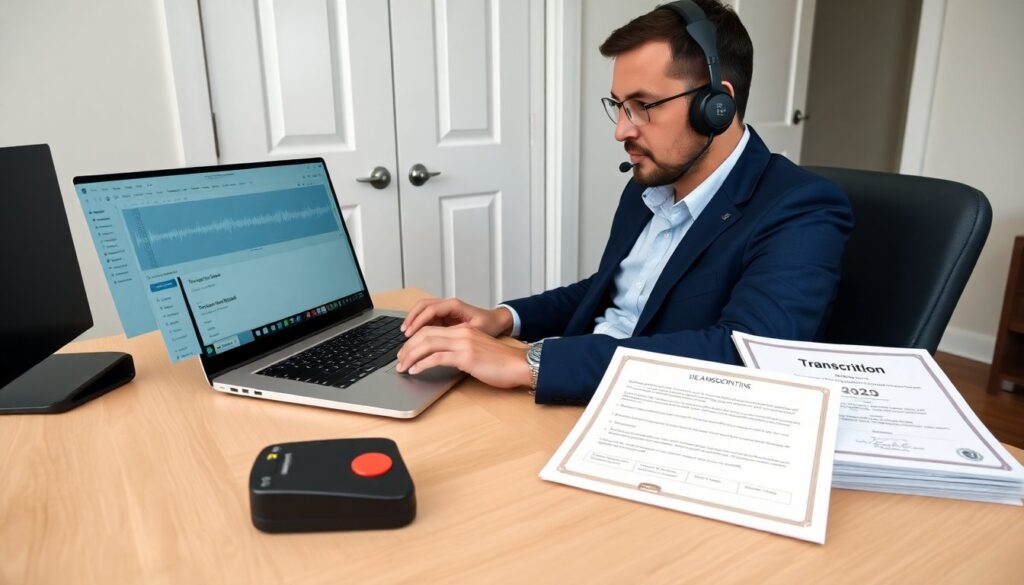
This guide shows how to get excellent transcription training Tomoson offers and how learners convert skills into paid work. It lists the course scope, a step-by-step completion workflow, a four-week practice plan, and next steps for paid gigs. It keeps language clear and actions direct so readers can follow and apply each step.
Key Takeaways
- Tomoson’s transcription training provides comprehensive lessons on skills, software, and quality standards essential for accurate transcription work.
- The course includes practical exercises, timed drills, and feedback to help learners achieve high accuracy and prepare for client-like projects.
- A structured four-week practice plan gradually increases transcription speed and complexity, ensuring steady skill development.
- Graduates should create a freelance toolkit, build a portfolio with diverse samples, and use their Tomoson certificate to boost credibility when applying for jobs.
- Successful transcriptionists apply client screening, clear communication, and pricing strategies to secure and maintain paid work.
- Using automation tools and tracking earnings helps transcriptionists scale their freelance business efficiently.
What Tomoson Transcription Training Covers And Who It’s For
Tomoson course instructors teach core transcription skills and quality standards. The course covers audio setup, headset selection, common file formats, and transcription shortcuts. It teaches how to spot speech patterns, timestamps, speaker labels, and common error types. It includes modules on grammar rules for transcripts, formatting client-ready files, and basic confidentiality practices.
The training shows software options and keyboard shortcuts. It shows how to use foot pedals, text expanders, and simple macros. It shows how to clean audio, adjust playback speed, and apply noise reduction tools. It also shows quality checks and a final review checklist.
The course fits new transcribers, part-timers, and professionals who need to standardize output. It suits people who want steady freelance work and those who want to join transcription teams. It assumes basic typing ability. It does not require prior audio editing experience.
Tomoson gives sample files and timed drills. It gives feedback on submitted practice transcripts. It gives a certificate after learners pass the final accuracy test. The certificate helps when applicants bid on platforms and when they present samples to clients.
How To Complete Tomoson’s Training: Step-By-Step Workflow
Learners register, confirm the course start date, and download materials. They watch short module videos and read the quick-reference guides. They open practice files and follow the timed drills. They submit transcripts to the instructor for feedback. They repeat drills until they meet the accuracy target.
Learners set a weekly practice goal and track words per minute and accuracy. Learners log errors and review them after each session. Learners increase playback speed in small steps only after accuracy holds steady. Learners use the final checklist before submission: correct timestamps, consistent speaker labels, and standard punctuation.
Tomoson requires a final test that resembles client work. The test uses mixed audio quality and multiple speakers. Passing the test earns the course certificate and access to the alumni forum. The forum lists job leads and client screening tips.
Learners who want to move faster pair practice with focused reading on style guides. They study common industry formats for legal, medical, and media transcripts. They also set up a work environment that reduces distractions and improves focus.
Sample 4‑Week Practice Schedule And Exercises
Week 1: Learners practice basic transcription with single-speaker interviews. They aim for 40–50 wpm and 95% accuracy. Exercises: short interviews, speed drills, and keyboard shortcut practice.
Week 2: Learners add multi-speaker files and background noise. They aim for 50–60 wpm and 94% accuracy. Exercises: speaker ID, timestamps, and noise-handling drills.
Week 3: Learners practice specialty formats (business meetings, podcasts). They aim for 60–70 wpm and 93% accuracy. Exercises: formatting templates, style guide tasks, and time-coded sections.
Week 4: Learners do mixed-quality files under timed conditions. They simulate client projects and run the final checklist on each file. They aim for consistent speed and accuracy for the course test.
This schedule resembles athlete practice routines that focus on skill repetition and review. For an example of an athlete career described through practice and review, see the feature on Sugano’s journey.
Turning Tomoson Training Into Paid Work: Tools, Portfolio, And Next Steps
Graduates set up a basic freelance toolkit and a portfolio. The toolkit includes a quality headset, transcription software, a foot pedal, and a clean work folder structure. The software can be an editor with timestamp support and phrase expansion. The foot pedal speeds up playback control and reduces mouse use.
Graduates build a simple portfolio with three labeled samples: one interview, one multi-speaker meeting, and one industry-specific transcript. They redact client names and attach a short checklist that shows the accuracy rate and time spent. This proof helps clients assess speed and reliability.
Graduates create profile pages on freelance platforms and on a personal site. They use the Tomoson certificate as a credibility signal and link to their portfolio samples. They set clear rates that match experience and file complexity. They offer package deals for standard-length files and per-minute pricing for longer work.
Graduates apply screening steps when they accept clients. They ask for the file format, expected turnaround, and any style guide. They request a short paid trial when a client has unclear requirements. They keep communication short and factual and confirm deadlines in writing.
Graduates scale work with automation where possible. They use text expanders for recurring phrases and templates for client emails and invoices. They track time and earnings with simple spreadsheets and review rates quarterly. They also join transcription groups and job lists to find steady clients.
Tomoson alumni often find steady work within three months when they follow the practice schedule and build a clear portfolio. They focus on consistent delivery and transparent pricing to win repeat clients.