

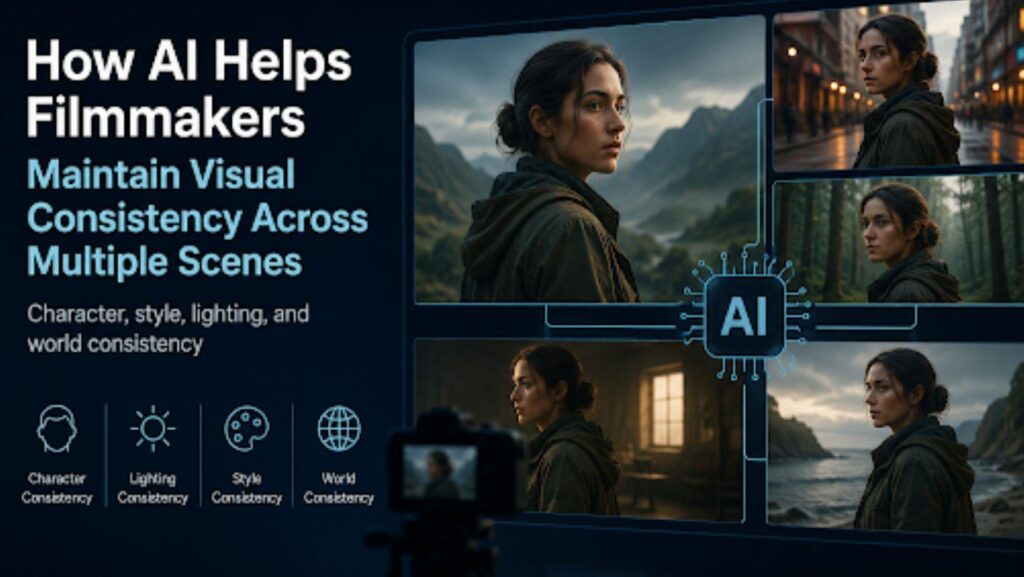
One of the biggest challenges in filmmaking is making every scene feel like it belongs to the same story. A character’s appearance, the lighting, the camera style, the production design, and even the mood all need to remain consistent from one shot to the next. Small differences can distract viewers and weaken the overall experience.
In traditional filmmaking, maintaining continuity requires close collaboration between directors, cinematographers, costume designers, production designers, and continuity supervisors. Every detail is carefully documented to ensure that scenes filmed days or even months apart still fit together seamlessly.
As AI becomes a bigger part of video production, creators face a new challenge. While AI can generate impressive visuals quickly, keeping those visuals consistent across multiple scenes requires more than a good prompt. It requires a workflow that remembers creative decisions and applies them throughout the project.
Fortunately, modern AI filmmaking tools are evolving to solve exactly this problem.
Why Visual Consistency Matters in Filmmaking
Visual consistency creates immersion. When characters, environments, and cinematography remain stable throughout a film, viewers stay focused on the story instead of noticing changes between scenes.
Consistency affects almost every aspect of production, including:
- Character appearance
- Wardrobe and accessories
- Lighting direction
- Camera language
- Color grading
- Production design
- Environmental details
- Overall visual tone
Even small inconsistencies can become noticeable when scenes are edited together. A slightly different hairstyle, changing room lighting, or inconsistent camera perspective can make a sequence feel disconnected.
For filmmakers creating longer stories, maintaining continuity is just as important as generating high-quality visuals.
Character Consistency Builds Stronger Stories
Characters are often the first thing audiences notice. If a digital actor changes facial features, hairstyle, clothing, or proportions between scenes, viewers immediately recognize that something feels different.
Character consistency goes beyond appearance. It also includes:
Facial Identity
The same facial structure, skin tone, eye shape, hairstyle, and expressions should remain recognizable throughout the project.
Wardrobe Continuity
Costumes help audiences identify characters quickly. Clothing changes should happen intentionally as part of the story rather than as a result of inconsistent generation.
Performance Style
Body language, posture, and movement contribute to a character’s personality. Keeping these elements consistent makes performances feel more believable.
When these details remain stable, audiences can focus on the narrative instead of visual distractions.
Maintaining a Consistent Visual Style
Every film develops its own visual identity.
Some projects use warm natural lighting, while others rely on dramatic shadows or highly stylized color palettes. Camera framing, lens choices, and composition also contribute to the overall cinematic language.
If these creative decisions change unexpectedly between scenes, the film can lose its visual rhythm.
Maintaining consistency involves controlling elements such as:
- Lighting style
- Camera angles
- Lens perspective
- Color palette
- Depth of field
- Scene composition
AI can generate impressive individual shots, but creating an entire sequence that feels visually connected requires consistent creative direction.
Why Project Memory Is Becoming Important in AI Filmmaking
Many AI generation tools treat every prompt as an independent request. This means creators often need to repeat the same character descriptions, visual references, lighting instructions, and style preferences every time they generate a new scene.
As projects become larger, this approach becomes difficult to manage.
Modern AI filmmaking workflows are beginning to solve this by introducing project memory. Instead of treating scenes individually, they allow creative decisions to remain connected throughout production.
For example, invideo Agent supports a connected filmmaking workflow where creators can move from scripting and visual planning to generation and editing while maintaining project context. Rather than rebuilding character descriptions and visual direction for every scene, creators can continue developing a project around shared creative decisions.
With invideo Agent Two, these workflows become even more advanced through project memory and specialized creative agents that help maintain consistency in areas such as cinematography, storyboarding, casting, and VFX. This allows filmmakers to build multi-scene projects where characters, lighting styles, locations, and visual direction remain aligned throughout production.
Lighting Consistency Creates a Cohesive World
Lighting does more than illuminate a scene. It establishes mood, emotion, and realism.
Imagine a dramatic conversation filmed in warm golden light suddenly switching to cool blue lighting without any narrative reason. Even if the dialogue remains the same, the emotional impact changes.
Filmmakers usually define a lighting style early in production and maintain it throughout related scenes.
Important lighting considerations include:
Direction of Light
Where the light originates should remain believable between connected shots.
Color Temperature
Warm and cool lighting influence emotional tone. Consistency helps maintain atmosphere.
Shadow Quality
Soft lighting creates a different visual experience than hard directional light.
Maintaining these elements across scenes helps audiences remain immersed in the story.
Building Consistent Digital Worlds
Visual continuity extends beyond characters.
Locations, environments, architecture, props, and production design all contribute to world-building.
Whether a story takes place in a futuristic city or a quiet countryside village, every scene should reinforce that environment.
Consistency includes:
- Background design
- Environmental lighting
- Weather conditions
- Color palette
- Architectural style
- Object placement
Strong world-building makes fictional environments feel believable and supports the overall storytelling experience.
Camera Language Should Feel Intentional
Every director develops a visual language through camera movement and composition.
Some stories rely on handheld realism, while others use slow cinematic tracking shots or carefully composed wide frames.
Maintaining consistent camera language helps create visual rhythm across multiple scenes.
Important elements include:
Shot Selection
Close-ups, medium shots, and wide shots should support the emotional progression of the story.
Camera Movement
Tracking shots, pans, crane movements, and static compositions all influence how audiences experience a scene.
Framing
Consistent framing creates familiarity and strengthens visual storytelling.
Even AI-generated scenes benefit from maintaining a deliberate camera style.
AI Helps Reduce Repetitive Creative Work
One advantage of AI-assisted workflows is reducing repetitive production tasks.
Instead of manually redefining every character, location, and visual reference, creators can spend more time refining creative decisions.
AI can support:
- Scene planning
- Storyboarding
- Visual references
- Character development
- Style exploration
- Continuity management
This allows filmmakers to focus on directing rather than repeatedly describing the same creative information.
Human Creativity Still Drives Consistency
AI can support continuity, but it cannot replace creative intent.
Directors still decide:
- Why a shot exists
- What emotion it should create
- How the audience should experience a scene
- Which visual choices support the story
AI works best when it strengthens these creative decisions instead of replacing them.
The combination of human storytelling and AI-assisted production allows filmmakers to work faster while maintaining artistic control.
The Future of AI-Powered Film Continuity
As AI filmmaking continues to evolve, visual consistency will become one of the most valuable creative capabilities.
Future workflows will likely focus less on generating isolated clips and more on developing complete productions where characters, locations, lighting, camera language, and production design remain connected from beginning to end.
Project memory, reference-based generation, and intelligent creative workflows are already moving the industry in this direction.
For filmmakers, this means spending less time correcting inconsistencies and more time focusing on storytelling.
Final Thoughts
Creating visually consistent films has always required careful planning and collaboration. AI is not changing that goal—it is changing how creators achieve it.
By helping maintain character identity, lighting, camera style, world-building, and project continuity across multiple scenes, AI is becoming an important creative partner during production.
The strongest AI filmmaking workflows are those that remember creative decisions instead of treating every scene as a separate task. As these technologies continue to mature, filmmakers will be able to build longer, richer, and more visually cohesive stories while preserving the artistic vision that makes every film unique.