

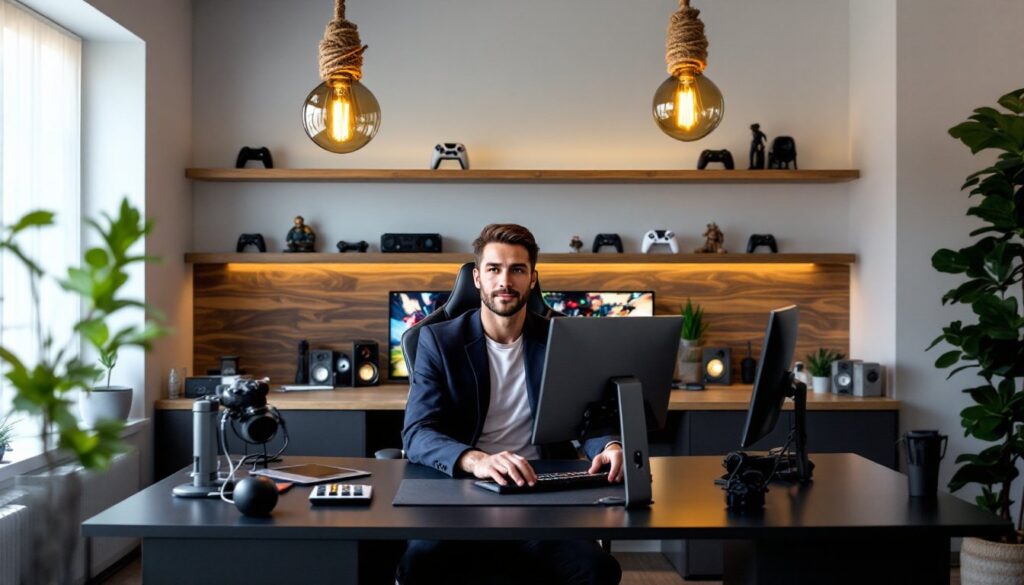
A gaming den needs more than RGB strips and ceiling glare to feel lived-in. Rope and wood lighting, think thick hemp or jute rope paired with reclaimed oak or pine, brings warmth, texture, and a bit of analog soul to otherwise neon-heavy rigs. This guide explains why those fixtures work in gaming spaces, where to place them, how to pick bulbs and sizes, and practical DIY and safety tips so a setup looks pro without becoming a fire hazard.
Key Takeaways
- Rope and wood lighting fixtures add warmth and texture to gaming spaces, reducing eye strain and softening harsh RGB lighting.
- Using warm 2200–2700K LED filament bulbs with high CRI enhances visual comfort and maintains natural skin tones during streaming.
- Strategic placement of rope-and-wood lights behind monitors, in alcoves, or as pendant clusters improves ambiance and camera presence.
- Choosing appropriate rope thickness and wood dimensions ensures durability and aesthetic balance in gaming setups.
- Following safety guidelines such as using UL-listed components and maintaining ventilation prevents hazards in DIY rope-and-wood lighting installations.
- Incorporating dimmable or smart RGB bulbs allows gamers to customize lighting moods for different gaming and streaming scenarios.
Why Rope And Wood Lights Work So Well In Gaming Spaces
Rope-and-wood fixtures add tactile contrast to glass monitors, aluminum cases, and plastic controllers. Gamers often spend long sessions in front of high-contrast displays, a warm, diffuse lamp reduces eye strain and creates a comfortable backdrop without competing with screen content.
Visually, rope introduces organic curves and shadow play, while wood anchors the space with grain and warmth. Together they soften hard edges and break up RGB saturation. Functionally, a single pendant fitted with a warm 2200–2700K bulb lowers perceived contrast and can improve focus during long play, especially in genres that benefit from low ambient glare like flight sims or long-form RPGs.
Design-wise, these fixtures complement streaming backgrounds. A streamer can use a rope-and-wood sconce as a key background element that reads well on camera, it’s identifiable at 720p and helps create depth, which is important for scene composition and viewer retention.
Key Benefits: Ambience, Texture, And Custom Vibe
Ambience: Rope-and-wood lights produce warm, diffuse illumination that reduces eye strain and creates mood. A 6–12W LED filament bulb with a CRI of 90+ mimics incandescent warmth without heat or high energy draw.
Texture: The rope’s fibers and the wood grain introduce tactile detail. That texture shows on camera and in-person: it reads as “crafted” rather than mass-produced. Gamers who care about desk aesthetics get a richer visual story than with plastic desk lamps.
Custom vibe: These fixtures are modular. Swapping bulb color temperature (2200K for candlelike warmth, 3000K for neutral warm white) or upgrading to a dimmable smart RGB filament lets players tune the mood for cinematic cutscenes, chill lobbies, or high-intensity sessions.
Practical benefits: Rope fixtures are forgiving in imperfect ceilings or exposed-beam rooms because the rope hides wiring and anchor points. Wood can be cut to fit small alcoves or mounted as a floating shelf with integrated downlights, useful for consoles, controllers, and collectibles.
Popular Styles And Where To Use Them
Rope-and-wood lights come in several styles that suit different parts of a gaming setup. Below are practical placements and why they work.
- Gaming desk backdrops: Mount a horizontal reclaimed-wood rail with integrated rope-suspended filament bulbs behind monitors. It creates depth and a soft backlight that reduces screen glare.
- Console alcoves: Use a small wooden sconce with a single downward bulb to highlight controllers and game boxes without washing the screen.
- Streaming backgrounds: Cluster three pendant bulbs hung at staggered heights over a wooden shelf of collectibles for a cinematic bokeh effect on stream.
- Full-room fixtures: A central wooden chandelier with rope-wrapped arms works in larger rooms, but keep overall lumen output low to preserve screen contrast.
Pendant And Wall Sconce Designs For Focused And Ambient Light
Pendant designs with rope suspensions are ideal for directional pools of light. Single-bulb pendants (cord drop 0.6–1.2 m) over a desk can be aimed slightly behind the monitor for effective bias lighting. Use a shade or smoked glass to prevent direct glare into the camera.
Wall sconces with short rope loops and a downward-facing bulb create controlled accent lighting for shelves or art. For streamers, a sconce placed just out of frame can rim-light the subject, improving separation from the background.
Design tip: Mix one warm filament bulb (2200–2700K) as the focal accent with subtle RGB elements elsewhere. That avoids color clashes and keeps the skin tones natural on camera.
How To Choose Size, Bulb Type, And Color Temperature
Size selection
- Pendant drop: Desk pendants typically hang 60–90 cm above the desk surface: shorter for wall sconces (20–40 cm). Keep pendants at least 40 cm behind the monitor plane to avoid glare.
- Rope thickness: 10–20 mm rope is sturdy and reads well on camera: thicker rope (25–30 mm) is visually heavy and suits large rooms.
- Wood dimensions: A 5–8 cm thick shelf or rail is sturdy enough to mount sockets and anchors without flex.
Bulb type
- LED filament bulbs: Best mix of warmth, low heat, and look. Choose 4–12W depending on desired lumen output (roughly 400–1100 lm). Prioritize bulbs with CRI ≥ 90 for accurate color when streaming.
- Smart RGB bulbs: Use these where dynamic color matters: set them to warm whites for gameplay as RGB can wash out skin tones.
- Edison-style bulbs: Great for appearance but often inefficient and hot: swap for LED equivalents to reduce heat and fire risk.
Color temperature and lumen targets
- Bias/backlight: 2200–2700K, 150–300 lm per fixture to avoid overpowering the monitor.
- Ambient room light: 2700–3000K, 300–800 lm total depending on room size.
- Accent/RGB: Use low-intensity RGB (50–150 lm) so colors pop without altering perceived contrast.
Platform note: These recommendations apply across PC, console, and mobile gaming rooms, lighting is platform-agnostic but matters most for streamers and content creators.
DIY, Installation, And Safety Tips For Rope And Wood Fixtures
DIY builders get a lot of creative latitude, but safety cannot be skipped. Follow these practical steps.
Planning and materials
- Use UL-listed or equivalent-rated sockets and connectors. Don’t improvise with unknown parts.
- For rope, choose natural fibers (hemp, jute) for look, but ensure they’re lined or treated if they contact wiring. Alternatively, use braided fabric cord designed for lighting.
- Wood should be kiln-dried or sealed to prevent warping. Reclaimed wood is fine if structurally sound and treated for pests.
Wiring and mounting
- Run wiring inside a conduit or use a cloth-covered lamp cord rated for fixtures. Never let bare wires sit against untreated rope or wood.
- Anchor points: Use proper ceiling anchors (toggle bolts for drywall, lag bolts for beams). Rope anchors should be rated for at least twice the fixture weight.
- Dimming and control: Use dimmable LEDs with compatible dimmer switches. For smart control, ensure bulbs and hubs match (Zigbee, Wi‑Fi, or Bluetooth).
Heat and ventilation
- Keep bulbs away from tight wood enclosures. Even low-watt LEDs need some airflow. Maintain at least 3–5 cm clearance between the bulb and surrounding material.
Fire safety and certification
- Install a smoke detector in adjacent rooms if creating a DIY overhead fixture.
- If selling or gifting fixtures, follow local electrical codes and have a certified electrician inspect hardwired installations.
Practical install tips for gamers
- Test camera framing and glare during install. Stream in 720p and 1080p to check how the lights read at common streaming resolutions.
- Use inline switches or smart bulbs for quick scene changes between “game” and “stream.”
- Cable management: Route cords behind the desk and use adhesive cord channels. Exposed loose cords ruin the aesthetic and can snag controllers.
Conclusion
Rope and wood lighting gives gamers a tactile, warm alternative to full RGB saturation. By choosing the right bulb types (CRI 90+, 2200–3000K), matching fixture sizes to room scale, and following basic electrical safety, players can craft a setup that looks handcrafted and functions for long sessions or streams. Small details, rope thickness, wood finish, and bulb placement, make the difference between a cozy den and a cluttered thrift look. Done right, these fixtures level up both comfort and camera presence.