

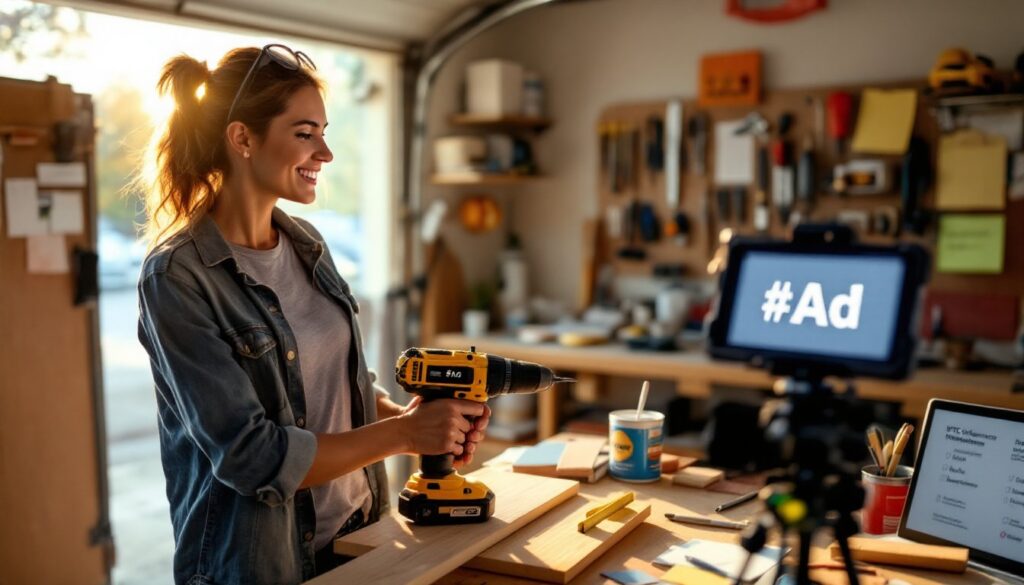
This guide is for homeowners, renters, and DIY creators who post tool demos, renovations, or product reviews and need to follow the FTC rules without slowing down a project. It explains exactly when a disclosure is required, how to word it for home improvement content, and where to place it on Instagram, TikTok, YouTube, blogs, and livestreams. The goal is simple: avoid enforcement risk and keep trust with viewers while still getting results from partnerships.
Key Takeaways
- FTC influencer disclosure guidelines mandate clear and conspicuous disclosure of any material connection with brands in all endorsements, including payments and free products.
- Home improvement creators must place disclosures where viewers can easily see or hear them, such as video intros, post captions, overlays, or livestream openings.
- Common disclosure phrases like “#Ad” or “Sponsored by [brand]” should appear early in content, ideally within the first 10 seconds of videos or at the start of posts.
- Contracts and influencer agreements should explicitly include disclosure language and placement requirements to ensure compliance and protect both creators and brands.
- Affiliate links, promo codes, and repeated brand partnerships require consistent disclosures every time they are used to maintain transparency and avoid FTC enforcement risks.
- Creators who purchase products outright or own them should clearly state ownership but do not need to disclose a material connection if no sponsorship exists.
What Are The FTC Influencer Disclosure Guidelines?
The FTC requires creators to disclose any “material connection” with a brand when endorsing a product or service. Material connections include payment, free or discounted product, affiliate links, employment, or close personal ties. The rule applies regardless of platform and regardless of whether the creator’s opinion is positive or negative.
Key operational points every DIY creator should memorize: 1) Disclosures must be clear and conspicuous: 2) They must be placed where users will see or hear them: and 3) Platform tools like paid partnership tags do not replace a custom disclosure when the context needs it.
Creators running repeat brand relationships should put disclosure requirements into the deal. For that reason, have an influencer contract template on hand that specifies disclosure language and placement for each content type. Contracts protect both brand and creator and make compliance non negotiable.
Who Needs To Disclose And When?
Anyone endorsing a product with a material connection must disclose each endorsement. That includes micro creators who accepted free stain samples, a homeowner who received discounted countertops, or a contractor being paid to demo a tool on camera.
Practical rules of thumb:
- Paid posts and product reviews where the brand supplied the item require disclosure. 2. Affiliate links and promo codes require disclosure every time they are used. 3. If the creator bought the product outright with no ties, disclosure is not required. 4. If the product is owned by the creator or their business, state ownership clearly.
Operational tip: add disclosure requirements to the scope and payment terms in creator briefs. Brands running multiple posts should include disclosure timing so creators know to place verbal disclosure at the start of videos and overlay text on clips. For legal-heavy verticals like gaming or betting, brands often build compliance-first workflows: brands and creators can learn from how iGaming operators treat these rules when running regulated promotions.
How To Make Disclosures Clear And Conspicuous
The FTC judges clarity by whether a reasonable consumer would notice and understand the disclosure. Vague thank-yous or buried hashtags do not count. The guidance below is tactical: where to put the disclosure and exact wording that works for home improvement content.
Practical Home-Improvement Examples And Ready-To-Use Templates
Below are battle-tested templates home improvement creators can paste into captions, video intros, or blog headers. Each is tuned for clarity and brevity.
Post templates:
- Static Instagram or Facebook post caption: “#Ad: Received free [product] from [brand] for this project.”
- Carousel cover image overlay: “Sponsored: [brand] supplied materials.”
Video templates:
- YouTube/TikTok intro line: “This is an #ad. [Brand] sent these tools for today’s demo.” Say it within the first 10 seconds. Also add the same text to the description.
- Tool review line: “Paid partnership with [brand]. I was given the [tool] to test.”
Story and livestream templates:
- Story overlay: “#Ad: partner post” placed center or top where it’s readable.
- Livestream: Verbally disclose when opening and when switching segments, plus a persistent on screen label.
Practical checklist for creators before posting:
- Did the caption or first line include a clear disclosure?
- Does the video have a spoken disclosure in the first 10 seconds?
- Are there overlays on short clips and Stories?
- Is the disclosure included in the contract or scope of work?
If creators want deeper guidance about negotiation language or contract clauses that force disclosure requirements, brands and creators often reference a list of essential contract items and clauses when negotiating influencer deals. For teams worried about fake or shadowed relationships, build fraud checks into onboarding and content reviews to confirm the connection is real.
Conclusion
Clear, early, and plain disclosures are not optional. Home improvement creators who keep the wording simple, place disclosures where viewers will immediately see or hear them, and lock language into the brief or contract avoid most enforcement risk and keep campaigns focused on outcomes. Start every sponsored post with a one line disclosure and put the same language in the contract.