

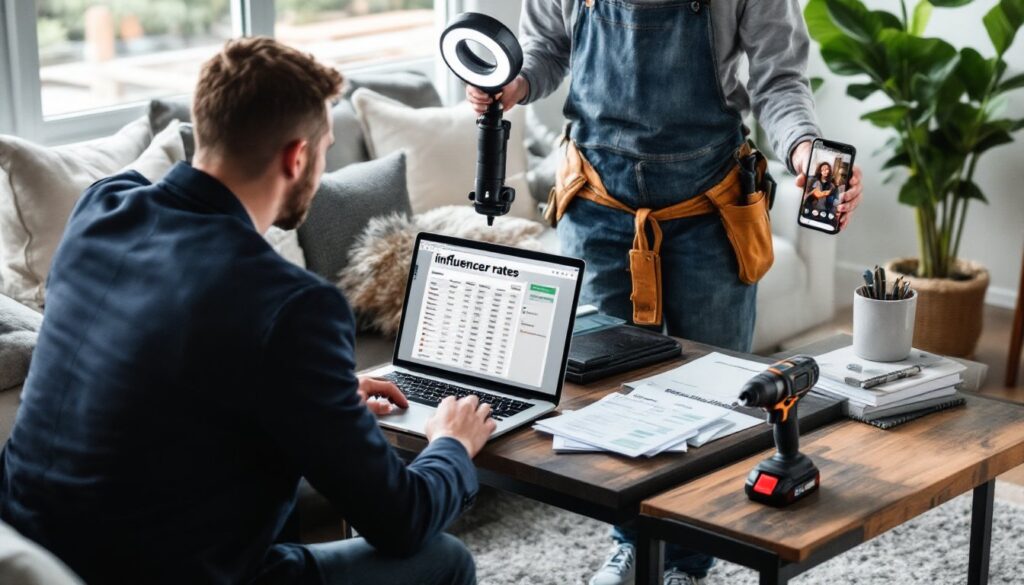
This guide is for founders, marketers, ecommerce operators, and hands-on homeowners who want to hire creators for home, DIY, or renovation projects without wasting budget. It explains exactly how influencers price posts in 2026, gives realistic per-platform benchmarks, and shows the negotiation moves that get measurable results. Read this and the team will be able to find the right creators, set a budget, and close a deal that drives traffic or sales rather than vanity metrics.
Key Takeaways
- Influencer rates in 2026 depend mainly on platform, follower tier, engagement rate, and audience fit, so prioritize creators with purchase-ready viewers for better ROI.
- Micro and nano influencers typically offer higher engagement and better return on ad spend than larger followers, making them ideal for home and DIY projects.
- Rates vary by platform: TikTok favors short-form viral content with performance bonuses, Instagram charges more for Reels than static posts, and YouTube commands higher fees due to production needs.
- Negotiate influencer rates by bundling posts, trading usage rights for lower fees, and offering performance-based bonuses tied to trackable sales.
- Small brands should pilot campaigns with $1,000–$5,000 across multiple micro and nano creators to identify high-converting formats before scaling budgets.
- Always use influencer rate calculators and request performance data, media kits, and recent post engagement to set realistic budgets and avoid overpaying.
How Influencer Rates Are Determined: Key Factors Brands Should Know
- Primary drivers. Influencer rates are set by platform, follower tier, engagement rate, and audience match. For home and DIY projects, creators who show finished projects, tool demos, or step-by-step builds typically command higher fees because their viewers are purchase-ready. Brands should prioritize audience fit over raw follower counts.
- Platform matters. Each platform has different content costs. TikTok pays for short-form virality and sound-driven trends. Instagram favors polished photos and Reels. YouTube requires production and time so rates are higher for mid and long-form. Amazon influencers can convert directly through storefronts and reviews and often combine fees with affiliate cut.
- Engagement beats followers for ROI. Micro and nano creators often deliver the best return on ad spend because they have higher engagement and niche trust. For example, a micro TikTok creator with solid niche content can outperform a macro account with low comment rates. When calculating value, look at recent posts, not peak metrics from two years ago.
- Content complexity and usage rights. A single 15 second Reel is cheaper than a multi-part tutorial plus a pinned YouTube video. Add 25 to 30 percent to a base fee if the brand wants extended usage rights or whitelisting. Long-term exclusivity, or multi-platform bundles, should reduce per-post cost: pay for volume, not redundancy.
- Performance history and data. Brands should ask for link-level tracking or promo code conversion stats before committing to higher rates. A creator with verifiable sales history and stable view-to-click conversion is worth a premium.
- Example practical checklists. When evaluating a creator, check these items in order:
- Recent posts in the category and their engagement pattern
- Audience signals: comments that show purchase intent or local geography
- Channel mechanics: do they use affiliate links, Amazon storefronts, or link-in-bio shops
- Content cadence: can they deliver on time and create follow-up posts
- Tools and quick tests. Use an influencer rates calculator to estimate baseline fees, then adjust by engagement and deliverables. If a creator pitches a high follower number with low views, that is a red flag requiring deeper vetting.
Typical Rate Ranges By Platform And Follower Tier (Realistic Benchmarks)
This section gives pragmatic ranges and formulas brands can use to budget for home and DIY influencer work.
- Quick formula approach. For creators under 10k followers with strong engagement, a common rule is 4 to 5 percent of follower count as a base dollar figure per post. For example, 5.3k followers at a 20 percent engagement rate often translates to about $212 to $265 per post.
- Benchmarks by tier and platform. These are starting points: actual asks vary by niche and season.
- Nano influencers (under 10k). Typical range: $50 to $400 per post depending on engagement and format. Nano creators are often ideal for hyperlocal renovation projects. For a deeper dive, compare published nano influencer rates when building a budget.
- Micro influencers (10k to 100k). Typical range: $400 to $2,500 per post. Micro influencers give balance between reach and conversion. On TikTok, micro creators often outperform Instagram micros for immediate product demos.
- Mid-tier (100k to 500k). Typical range: $2,500 to $10,000 per post. YouTube mid-tiers start at the higher end because of production requirements.
- Macro and mega (500k+). Expect $10,000+ per integrated campaign. These are for broad reach where CPM model makes sense.
- Platform specifics and why rates change.
- TikTok: Short-form rates are lower per post but have higher upside for virality. Creator fees are frequently combined with performance bonuses.
- Instagram: Static posts cost less than Reels. Stories with swipe links are cheap add-ons. See recent instagram influencer rates to model Reels versus static image pricing.
- YouTube: Flat fees are higher due to editing and permanence. Use youtube influencer rates as a guide for integrated mentions and product reviews.
- Twitter and other text platforms: Lower fees relative to visual channels unless the creator has high referral traffic.
- Hybrid pricing and bonuses. Common structures in 2026:
- Base fee for production plus a performance bonus tied to trackable sales
- Affiliate split where creators take a percentage of sales beyond a threshold
- Tiered discounts for multi-month partnerships
- Budget rule of thumb for DIY brands. For a pilot, allocate $1,000 to $5,000 to test 3 to 7 creators across micro and nano tiers. Track which formats convert before scaling.
- Use calculators to sanity check. Before outreach, plug proposed deliverables into an influencer marketing rates reference or an influencer rates calculator to avoid overpaying.
Negotiating Rates, Deliverables, And Contracts For Small Brands And Home Projects
Small brands and homeowners need negotiation playbooks that save cash and secure results. Follow these practical steps.
- Prep: know your ceilings. Run numbers using a rate benchmark and decide the absolute max the project can justify. Include production support like free products or a tool stipend to lower cash outlay.
- Outreach sequence (practical):
- Initial DM or email with a one-line project summary, budget range, and clear deliverable request.
- Request a media kit or recent rates sheet. If they do not have one, ask for three recent post links and results.
- Offer a short test paid post or product-sample collaboration before a larger contract.
- Negotiation tactics that work.
- Bundle for savings. Offer multi-post or multi-channel bundles. Creators will often drop per-post price for a guaranteed series.
- Trade-offs. Ask to remove ownership rights in exchange for a lower fee. If the brand needs rights for ads, expect to pay an extra 25 to 30 percent.
- Performance upside. Offer a modest base fee plus a clear bonus structure tied to tracked conversions. Creators will accept smaller bases if upside is fair.
- Local projects. For localized home services, prefer nano creators who can drive nearby customers and agree to lower flat fees for store visits or demo videos.
- Contract essentials. Always document:
- Deliverables with exact specs and deadlines
- Payment terms and escalation for missed deadlines
- Usage rights and duration
- FTC disclosure expectations and required tags
- Cancellation and makegood clauses
If a creator requests nonstandard contract language, negotiate for clarity rather than walk away. Use templates from reliable industry resources and adapt to the project.
- When to walk away. If a creator inflates reach with inconsistent views, refuses simple metrics, or demands open-ended rights, pause. That often means the relationship will not provide ROI.
- Learn from the pros. When preparing for negotiation review resources that explain tactics and typical concessions. For hands-on guidance on bargaining, consult a short primer on how to negotiate influencer rates to craft a fair offer.
- Small-brand hacks to stretch budget.
- Offer affiliate links with higher-than-normal splits to reduce upfront fees
- Provide clear in-kind value: tools, materials, or free professional services
- Run a micro-campaign with several nano creators rather than one macro creator for better conversion per dollar
- Post-campaign: aggregate performance and be ready to re-offer top performers multi-month deals at slightly improved rates. Repeat business secures capacity and lowers future CPM.
Conclusion
Influencer pricing in 2026 is predictable if brands stop guessing and start measuring. Use engagement and deliverable complexity to set baseline offers, run small tests across nano and micro creators, and structure deals with clear performance incentives. The first pilot should prove which creators move real customers, then scale those relationships rather than chasing reach alone.